
Last updated September 20, 2026
Free on-site gate assessment - hinges, posts, and your LiftMaster or Nice gate operator checked before anything is quoted
The assessment is free and the quote is the invoice.
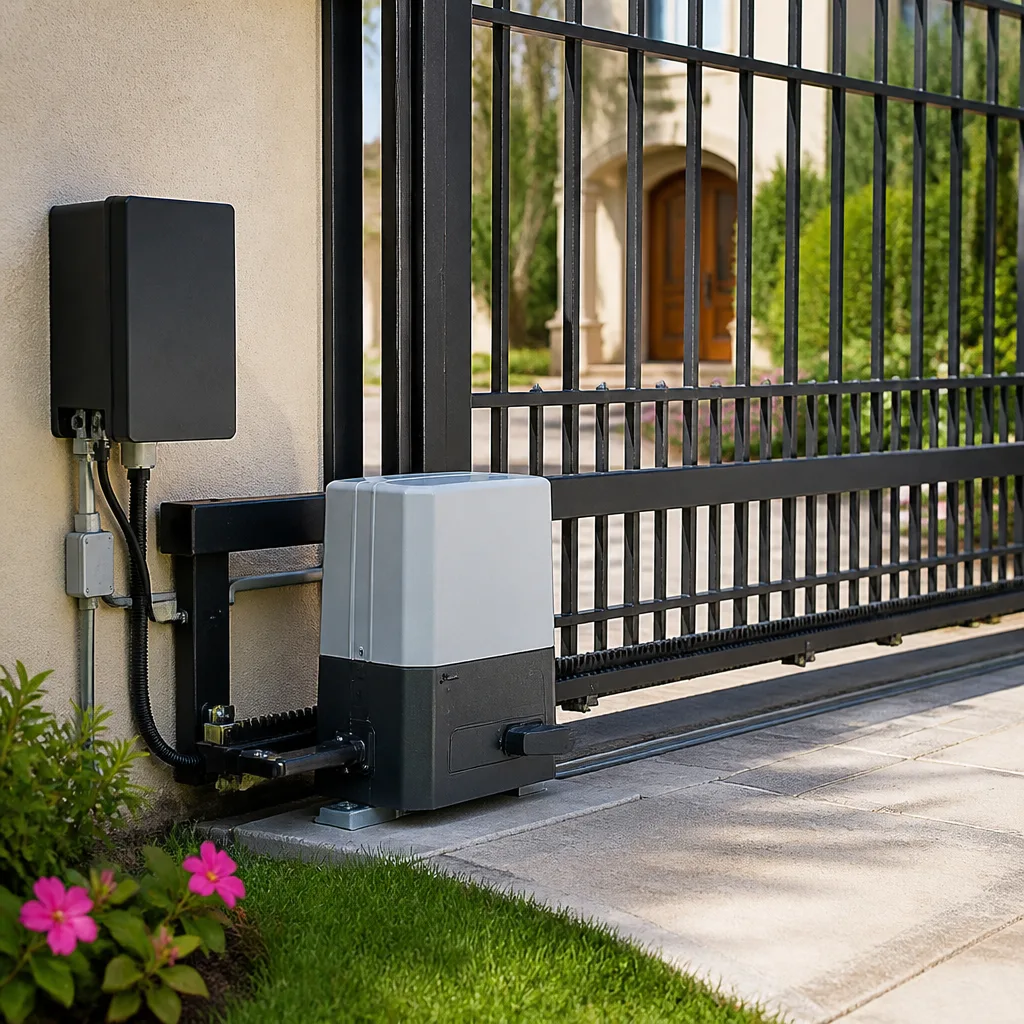
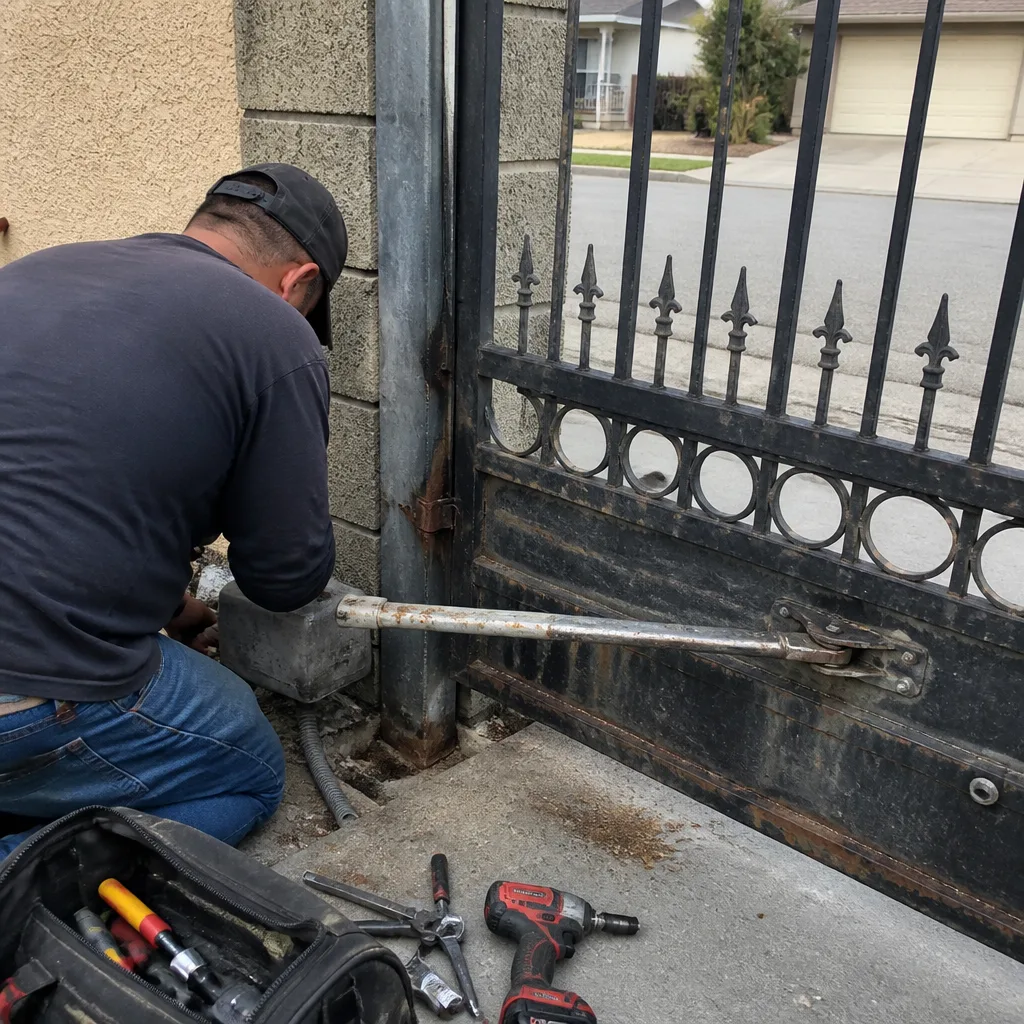 Before
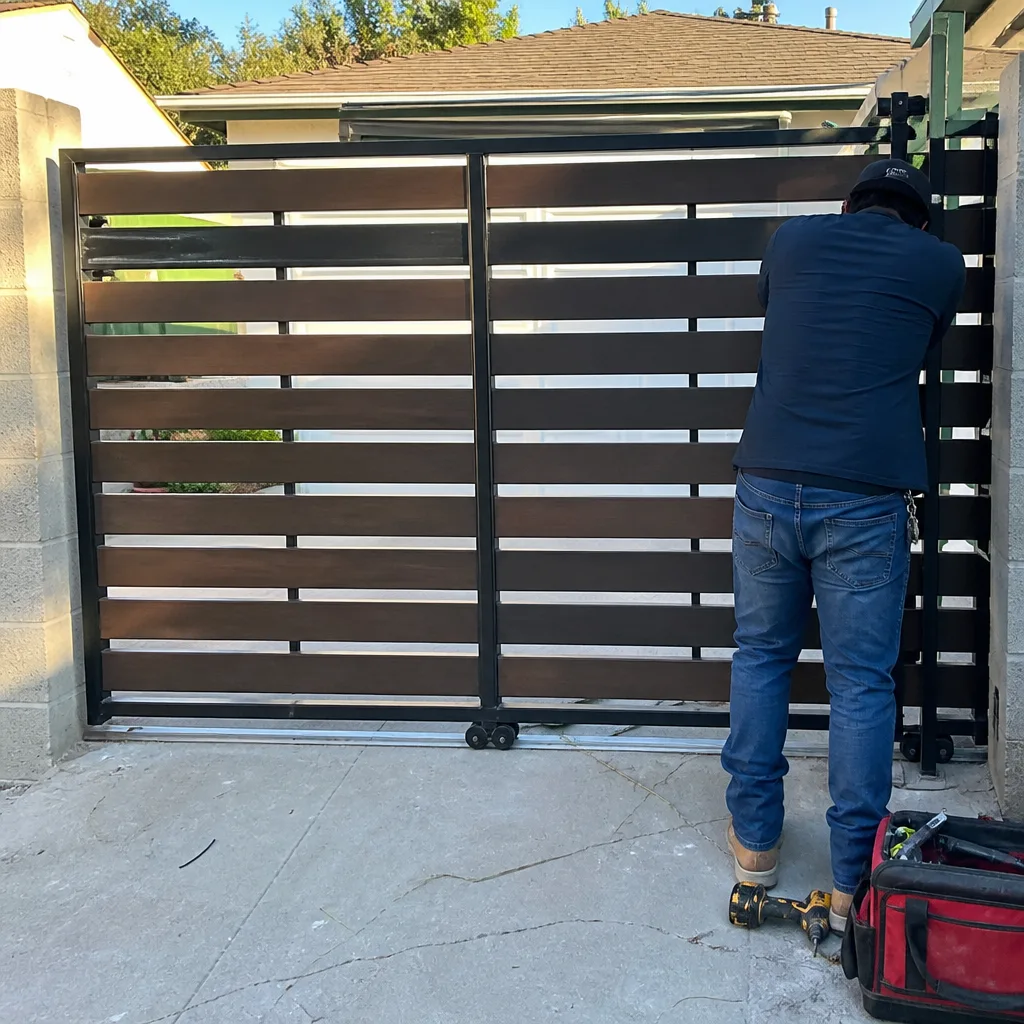 After
After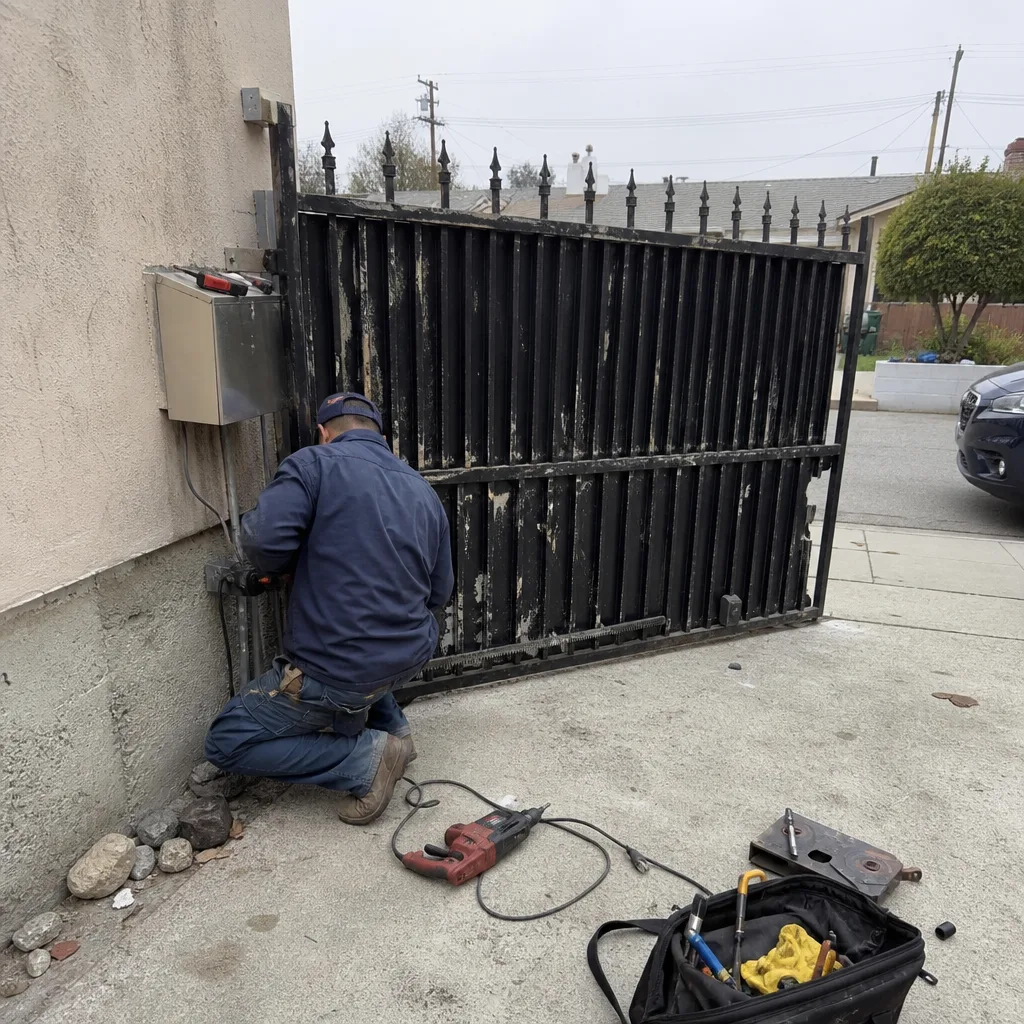 Before
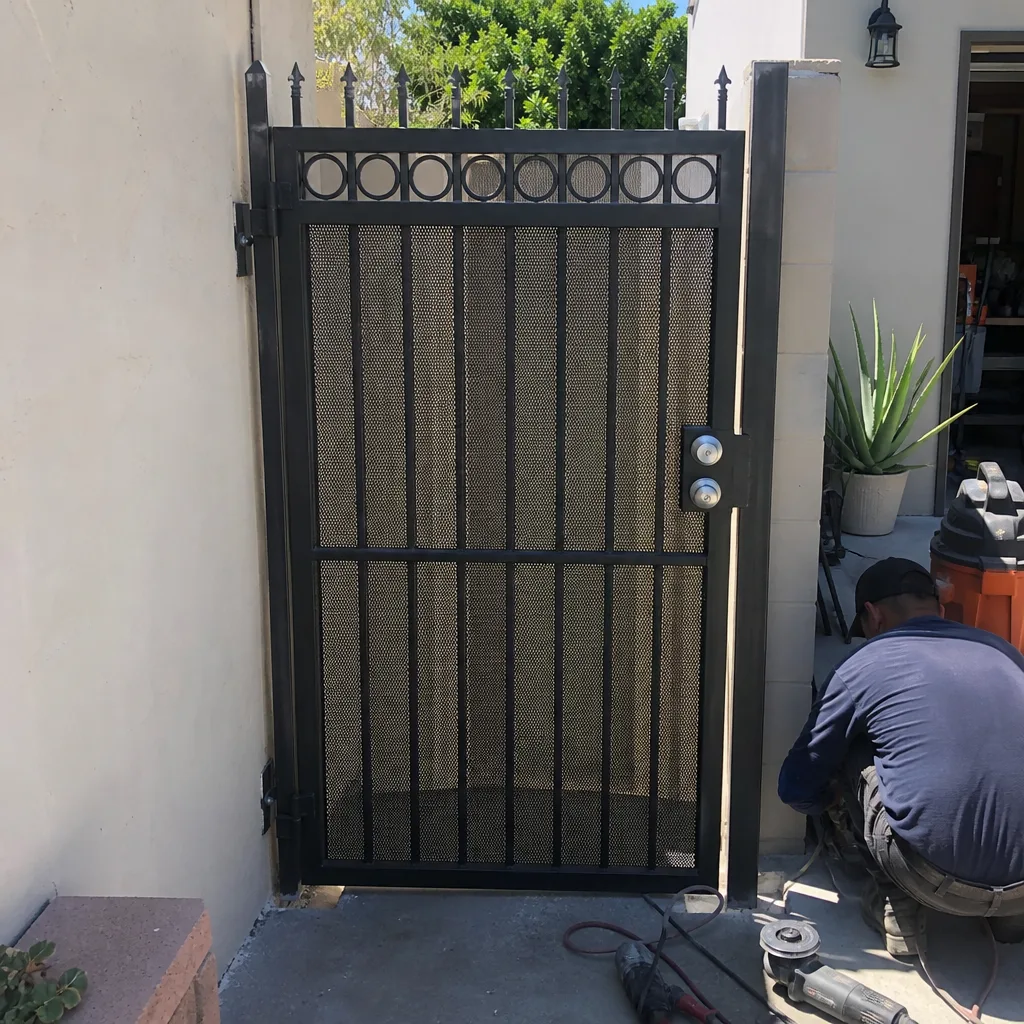 After
After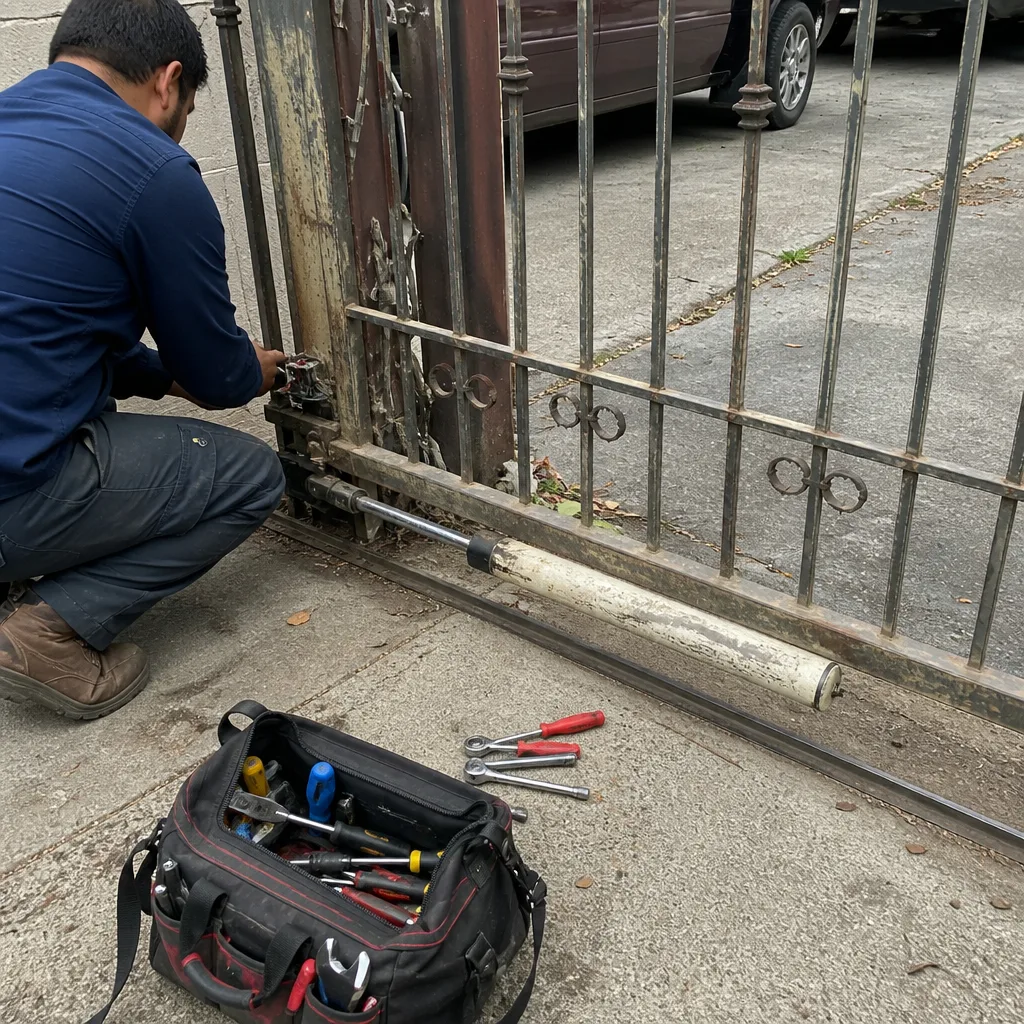 Before
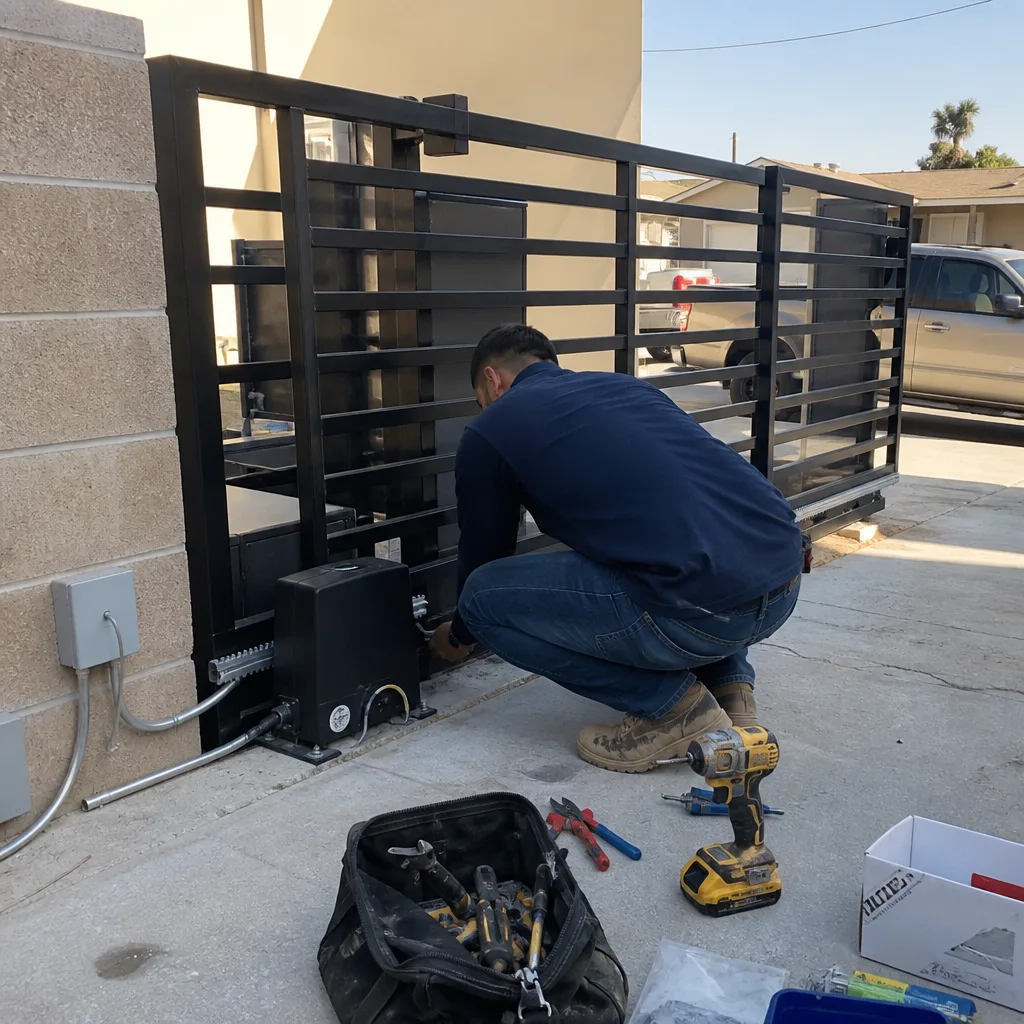 After
AfterGate Repair Permits, Codes & Inspections in CA: What You Need to Know
Most California homeowners find out about gate permit requirements the hard way: not when the gate is installed, but years later, when a home inspector flags it during escrow. By then, the contractor who did the work is gone, and the liability sits squarely with the property owner. If a contractor replaces your gate operator and doesn’t pull a permit, you are the party of record when that unpermitted work surfaces in a home sale inspection. That’s not a hypothetical. We work on gates in Inglewood every week, and we’ve walked behind enough handshake-and-invoice jobs to know exactly how this plays out. This guide explains what actually requires a permit in California, what doesn’t, and how to protect yourself before work starts.
Quick Answer
In California, like-for-like gate repairs (replacing a motor with the same type, swapping a hinge, fixing a wheel) generally do not require a building permit. But changing the gate’s footprint, adding a new operator where none existed, running new electrical service, or installing entrapment protection devices that alter the gate’s operation often does. In Inglewood and most of Los Angeles County, the trigger is the scope of work, not the price of the job. When in doubt, check your city’s building department online before work begins.
Table of Contents
- The Real Divide: Permit Work vs. Like-for-Like Replacement
- UL 325 and California Building Code: What Compliance Actually Means
- Inglewood and Los Angeles County: Which Jurisdiction Governs Your Gate
- Unpermitted Gate Work at Point of Sale: What Buyers and Sellers Face
- How to Request Compliance Documentation from a Contractor
- Retroactive Permits: The Long, Expensive Path
- Common Mistakes to Avoid
- When to Call a Professional
- Frequently Asked Questions
BeforeAfterThe Real Divide: Permit Work vs. Like-for-Like Replacement
The California Building Code doesn’t have a single line item that says “gate repair.” Instead, gate work falls under the same sections that govern fences, electrical installations, and automated systems. That’s why the permit question confuses so many people. The dividing line is scope of work, and it’s more specific than most guides admit.
Here’s the practical breakdown we use when advising Inglewood homeowners before a job starts:
No permit required (like-for-like repair or replacement):
- Replacing a gate operator motor with the same type and voltage, using the existing mounting and wiring
- Swapping out a damaged gate wheel, roller, or hinge with the same size and function
- Replacing a gate opener control board or remote receiver
- Repairing a weld on an existing gate leaf, provided the gate’s size and mass don’t change
- Replacing a photo-eye sensor with a UL 325 compliant unit of the same function
- Adjusting limit switches, travel stops, or force settings on an existing operator
Permit likely required (change of scope or new installation):
- Installing a new automatic gate where only a manual gate existed before
- Widening a driveway entrance or adding a second gate leaf
- Running new electrical conduit from the main panel to the gate location
- Installing a new gate that exceeds fence height limits (typically 42 inches in front yards in many California jurisdictions, but Inglewood has its own zoning rules)
- Adding an access control pedestal, keypad column, or intercom post that requires a concrete foundation
- Modifying the gate to swing out over a public sidewalk or right-of-way
The trigger isn’t the dollar amount. A $4,000 operator replacement might need no permit, while a $900 gate post relocation might need one if it changes the gate’s swing path or footprint. The question is whether the work changes what the gate does or how it interacts with the property, the electrical system, or the public right-of-way.
Our approach at every gate repair in Inglewood follows this same logic. We tell the homeowner up front whether the work is like-for-like or scope-changing, and we put that classification in writing before any tools come off the truck. That’s Haven Standard Clause 1: have it in writing. If a permit is required, the written scope says so, and the permit process becomes part of the job, not a surprise later.
UL 325 and California Building Code: What Compliance Actually Means
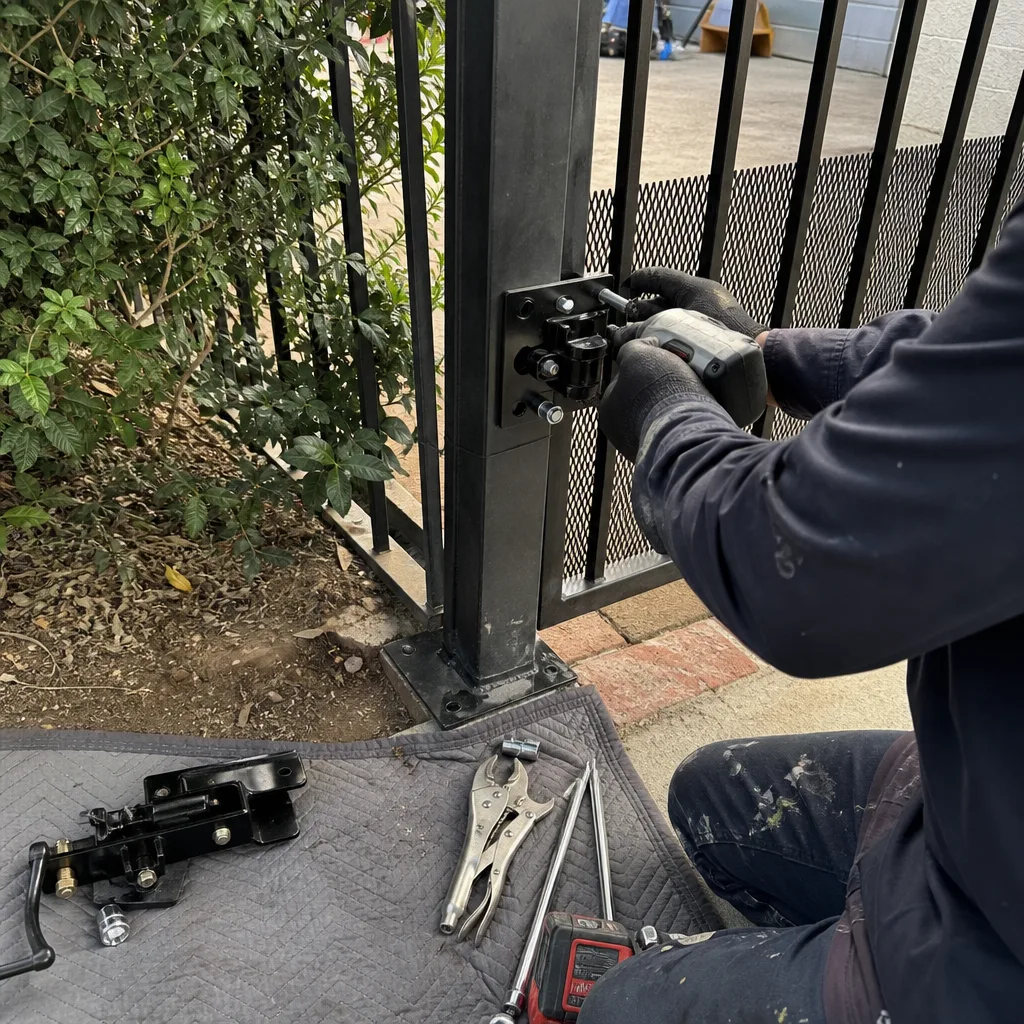
UL 325 is the national safety standard for automatic gate operators. It’s not a California-specific code, but California building departments enforce it as part of their gate permitting process. Since March 1, 2000, every automatic gate operator installed in the United States must comply with UL 325 entrapment protection requirements. What many homeowners don’t realize is that compliance isn’t a sticker on the motor. It’s a documented installation process.
Here’s what a UL 325 compliant installation actually requires a contractor to verify and record:
- Entrapment protection devices present and positioned correctly. This means photo-eyes (infrared beams that stop the gate if something crosses the path) positioned so they cover the full travel of the gate, or contact edges (pressure-sensitive strips that reverse the gate on contact) installed on the leading and trailing edges of the leaf.
- Force settings within specification. The operator’s internal force limiting must be adjusted so the gate reverses on contact with a rigid object using no more than 40 pounds of force at any point in its travel, per UL 325 testing criteria.
- Warning signs installed. Every automatic gate requires two warning signs placed on the gate, visible from both sides of the operator location, per UL 325 marking requirements.
- External entrapment protection for swing gates with exposed pinch points. Swing gates that create a pinch point between the moving leaf and a fixed object (a post, a wall, a column) require a photo-eye or contact edge covering that zone specifically.
- Documentation of the installation settings. The operator’s force settings, sensor positions, and travel limits should be recorded and left with the homeowner. This is the piece most contractors skip, and it’s the piece that matters if the gate is ever involved in an incident or inspected.
When we finish a gate motor or opener job in Inglewood, the homeowner receives a photo log of every sensor position, the force reading we set, and the part numbers installed. That’s Clause 4 of the Haven Standard: evidence on every job. If a code inspector or home buyer asks whether the gate meets UL 325, the answer isn’t a shrug. It’s a printed record.
One more point worth naming: California building departments don’t typically inspect UL 325 compliance separately from the building permit. If a gate operator is installed without a permit, no inspector verifies the entrapment protection. A homeowner can live with a non-compliant gate for years and only discover the deficiency when something goes wrong, or when a sharp home inspector checks during escrow. See our Gate Repair Warning Signs: A Inglewood Homeowner’s Reference Guide for what to watch for.
Inglewood and Los Angeles County: Which Jurisdiction Governs Your Gate
Inglewood is an incorporated city with its own Building and Safety Division. That matters because Inglewood residents deal with the City of Inglewood building department, not Los Angeles County, for property within city limits. But there are address ranges in the broader Inglewood area that fall under unincorporated Los Angeles County jurisdiction, and the rules don’t always match.
Here’s how to determine which jurisdiction applies to your property:
- Look up your property on the City of Inglewood’s official website. If the address appears in the city’s system, you’re under city jurisdiction. Inglewood building permits are handled by the Building and Safety Division, typically requiring an in-person or online application before the work begins.
- Check the Los Angeles County Assessor’s office for your parcel. If the parcel is listed as unincorporated, LA County building codes apply, and permits run through the county building department, not the city.
- Call the city building department directly. A five-minute call to Inglewood Building and Safety can settle the question. Ask specifically: “Is this address in the city of Inglewood jurisdiction for building permits?”
In our experience working on gates across Inglewood and the surrounding area, the jurisdiction split catches homeowners by surprise. A house on one side of a street can be city jurisdiction, and a house three blocks over can be county. The gate work itself may be identical, but the permit process differs. City of Inglewood requirements for a new automatic gate installation typically include a site plan showing the gate’s position relative to the front property line, the driveway, and any sidewalk or public right-of-way, plus a completed building permit application and the appropriate fee. County requirements for unincorporated parcels follow similar logic but route through different paperwork.
For gate installation projects, we handle the permit research as part of the written scope. Before a single post hole is dug, we know which jurisdiction applies and what that jurisdiction requires. The homeowner gets a copy of that research. If a permit is needed, the application goes in before the work starts, not after.
Unpermitted Gate Work at Point of Sale: What Buyers and Sellers Face
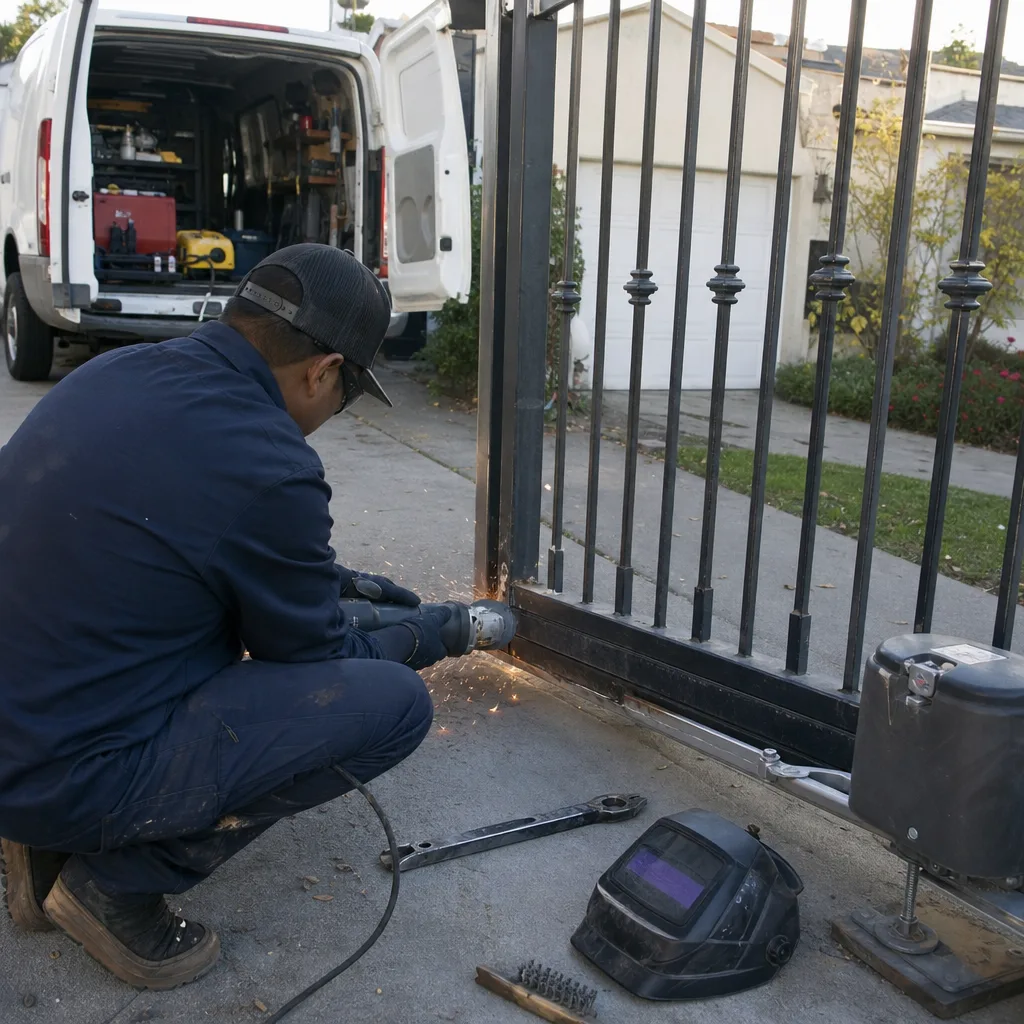
This is the section that matters most to homeowners who’ve already had gate work done and aren’t sure whether it was permitted. Unpermitted work surfaces at point of sale in predictable ways, and the consequences fall on the seller.
How unpermitted gate work is discovered during a home sale:
- Home inspector findings. A thorough home inspector will note an automatic gate operator that lacks UL 325 warning signage, has no visible entrapment protection, or appears to be a newer installation with no corresponding permit on record. This becomes a flagged item in the inspection report.
- Buyer’s agent review. Real estate agents increasingly check permit history as part of due diligence. An automatic gate installed in 2021 with no permit record is a red flag that gets asked about in writing.
- Title company disclosure requirements. Sellers complete a Transfer Disclosure Statement (TDS) that includes a question about unpermitted work. Lying on a TDS creates legal exposure far more expensive than the original permit would have cost.
- Appraisal complications. An appraiser who notices a gate addition that doesn’t match county records may value the improvement as unpermitted, reducing the property’s appraised value.
What happens next:
- The buyer may demand a credit to cover the cost of a retroactive permit and any required corrections.
- The seller may be required to obtain a retroactive permit before escrow closes, which means bringing the gate up to current code, not the code in effect when it was installed.
- The buyer’s lender may condition the loan on permit resolution, delaying or killing the sale.
- In the worst case, the buyer walks, and the property goes back on the market with a known disclosure.
We’ve been called to Inglewood homes mid-escrow to correct exactly these problems. A gate operator installed without entrapment protection fails the home inspection, the seller panics, and a job that should have cost $1,200 with a permit now requires a retroactive permit, a code correction, and rush scheduling to meet the closing date. The repair itself is usually straightforward. The permit retrofitting process is not.
Here’s the point: a homeowner who hires us for gate installation in Inglewood gets a written classification of the work before it starts. If a permit is required, it’s part of the job. If no permit is required, the written scope says why, citing the like-for-like replacement reasoning. That document goes into the homeowner’s records and becomes the answer if anyone asks questions at resale.
How to Request Compliance Documentation from a Contractor
Before you hire anyone to work on an automatic gate in California, you have the right to ask for documentation. Read our How to Hire a Gate Repair Contractor in Inglewood: A Step-by-Step Guide for the full vetting process. A legitimate contractor answers these questions directly. A contractor who gets defensive is telling you something.
Here’s the list of questions we recommend every homeowner ask, in writing, before gate work begins:
- “Is this work permit-required under my jurisdiction?” Ask them to identify the jurisdiction (city or county) and cite the code section that classifies the work.
- “Will you provide a written scope of work that states whether a permit is or isn’t required, and why?” If they won’t put it in writing, find someone who will.
- “What documentation will I receive when the job is complete?” A real answer includes photos, part numbers, and settings recorded. A handshake is not documentation.
- “If a permit is required, who pulls it and pays the fee?” In California, the homeowner is the party of record for permits on their property. A contractor can pull the permit on your behalf, but you should see it and receive a copy.
- “Is the equipment you’re installing UL 325 compliant, and can you document the entrapment protection settings after installation?” The answer matters for safety and for resale.
- “What’s your license number, and is it current with the California Contractors State License Board?” Verify it at cslb.ca.gov before you sign anything.
At Vance Gate Repair Inglewood, these answers are built into our process. The written price and scope come before work starts, the UL 325 documentation comes after, and the homeowner keeps both. That’s not an upsell. That’s the way Vance Gate Repair Inglewood home operates on every single job.
Retroactive Permits: The Long, Expensive Path
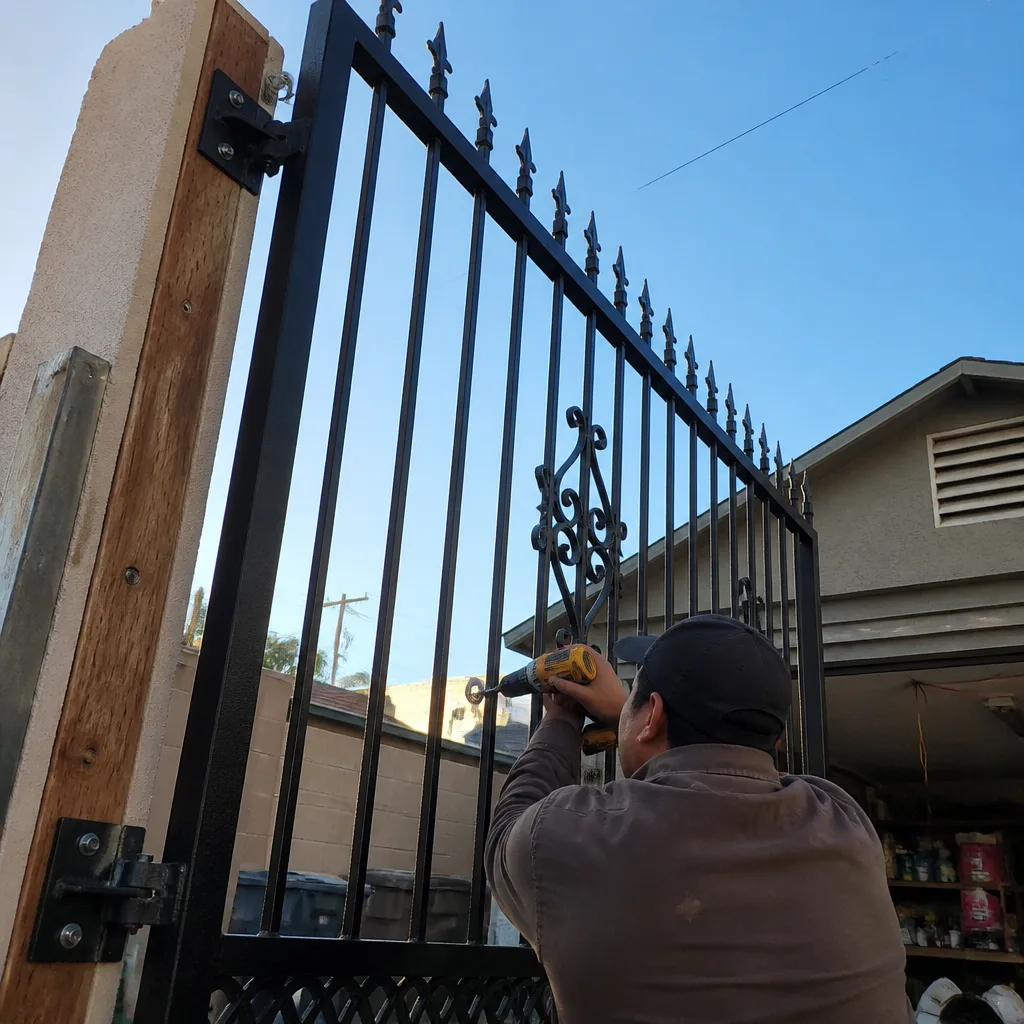
If unpermitted gate work is discovered, whether at point of sale or through a code enforcement complaint, the homeowner’s only path forward is a retroactive permit, sometimes called an “as-built” permit. The process is designed to bring the existing work into compliance with current code, not the code that applied when the work was originally done.
Here’s what a retroactive permit for gate work typically involves in the Inglewood area:
- Application with the building department. The homeowner files a permit application for the existing work, disclosing that the installation has already occurred.
- Inspection of the as-built condition. An inspector visits the property and reviews the gate installation against current code requirements, including UL 325 compliance for automatic operators, fence height restrictions, and setback requirements if the gate encroaches on a public right-of-way.
- Correction notice. If the existing work doesn’t meet current code, the inspector issues a correction list. For gates, this most commonly means adding missing photo-eyes, replacing non-compliant operators, repositioning warning signage, or addressing a swing path that protrudes over a sidewalk.
- Corrections and reinspection. The homeowner hires a contractor (ideally us, but we’ll be honest about when another company’s work can be salvaged) to make the corrections. The inspector returns to verify.
- Final permit issuance. Once the as-built work passes, the permit is issued retroactively, and the property record is cleared.
The cost of a retroactive permit includes the permit fee (often double the standard fee, as a penalty for unpermitted work), plus the correction labor, plus the time spent navigating the process. On a gate operator installation that should have cost a $150 permit fee at the time of installation, the retroactive path can easily reach $1,500 to $3,000 by the time corrections are made and inspections are passed. The math favors doing it right the first time.
We’ve helped Inglewood homeowners through retroactive permits, and we’re direct about one thing: the gate itself is usually fine. The problem is the paper trail. A motor installed without a permit might be perfectly safe. But “might be” doesn’t close escrow, and “probably fine” doesn’t satisfy an inspector. Our job on these calls is to bring the documentation up to the same standard as the mechanical work, and that’s exactly the kind of job where our written-record habit pays off for the homeowner.
Common Mistakes to Avoid
- Assuming “small job” means “no permit.” A gate operator swap on an existing mounting is usually permit-free. Adding a new keypad column with a concrete footing might trigger a permit even though the total job is under $1,000. The scope, not the size, is the trigger.
- Hiring a contractor who says “we don’t need a permit” without asking how they know. If they can’t cite the jurisdiction and the code section, they’re guessing. You’re the one who inherits the guess.
- Ignoring UL 325 entrapment protection on a “quick repair.” We’ve seen Inglewood gates with photo-eyes zip-tied to the gate leaf, pointed at the ground. The sensor is technically present. It is not technically functional. That’s not compliance.
- Failing to keep documentation from gate work already completed. If you replaced your operator in 2019 and kept the invoice but not the installation settings, you’re missing the piece an inspector will ask for. Request it from the contractor while they’re still in business.
- Not checking whether your property is city or county jurisdiction before pulling a permit. Filing with the wrong agency wastes weeks and forces a restart. Five minutes of verification saves the whole detour.
- Accepting a verbal estimate without a written scope. Verbal agreements about permit responsibility have a way of turning into “that was your responsibility, not mine” when the inspection fails. Get it in writing.
- Assuming the previous owner’s permits carried over. When you bought the property, you inherited the gate and whatever documentation did or didn’t exist for it. If the gate was installed without a permit, you own that problem now. It’s worth checking before you make changes.
When to Call a Professional
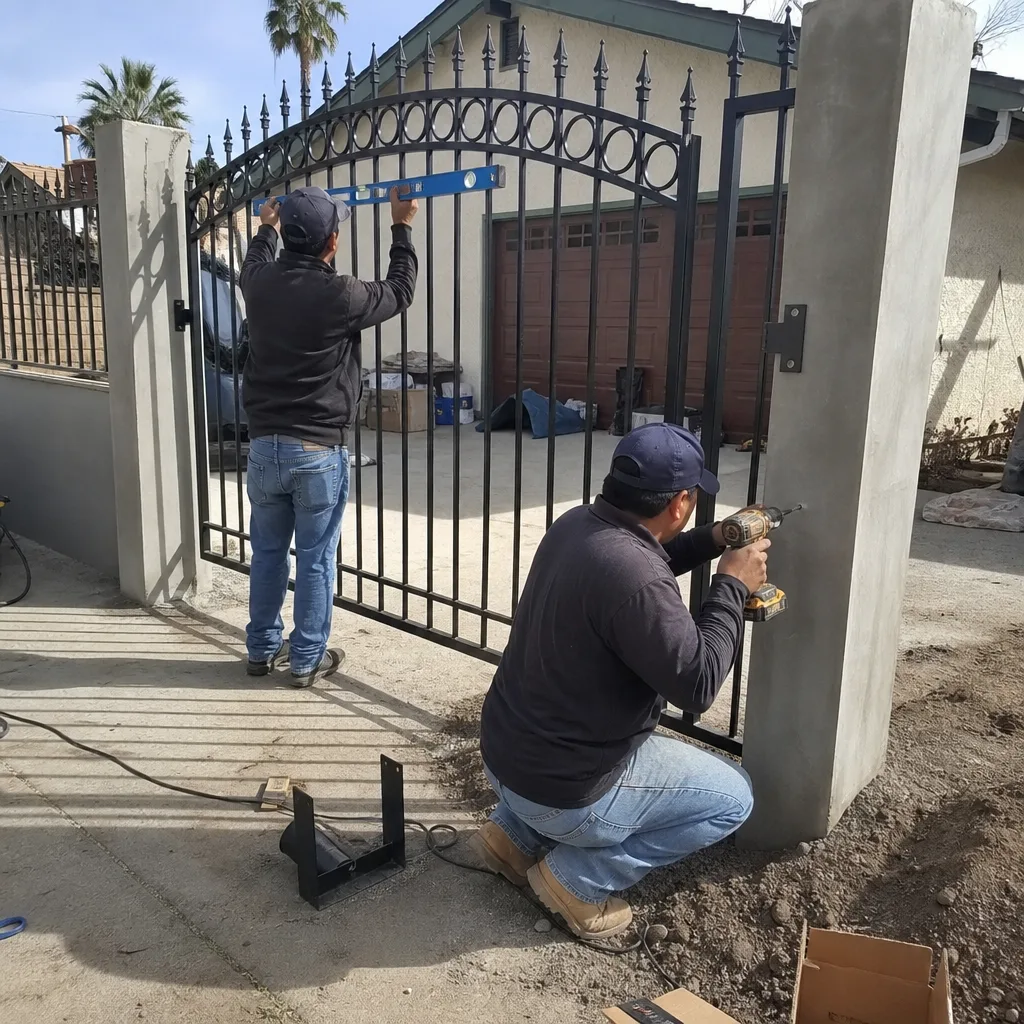
Automatic gates involve high-tension springs, heavy leaf sections, and electrical systems that can cause serious injury if handled incorrectly. If your gate is binding, reversing unexpectedly, or making a grinding sound from the operator, don’t attempt to adjust the limit switches or force settings yourself. Gates weighing hundreds of pounds don’t forgive a misplaced hand. The same caution applies to any work involving gate operators with exposed pinch points, where the gap between a moving leaf and a fixed post or column can close with enough force to break bones.
Call a professional when the gate is not functioning safely, when entrapment protection devices are damaged, when you suspect the previous installation was unpermitted, or when you’re planning a scope change that will trigger a permit. We’re honest about this: we work on gate repair in Inglewood every day, and we always prefer to fix rather than replace. Vance Gate Repair Inglewood offers free estimates in Inglewood. Call (424) 380-7998.
Frequently Asked Questions
Most like-for-like gate repairs, such as replacing a motor with the same type, swapping hinges or wheels, or adjusting limit switches, do not require a permit. A permit is triggered when the work changes the gate’s scope: new electrical service, a new operator where none existed, a change in the gate’s footprint, or any work affecting a public right-of-way. When in doubt, check with your local building department before work starts. For Inglewood properties, Vance Gate Repair can classify the work in writing before any job begins. Call (424) 380-7998.
UL 325 is the national safety standard requiring automatic gate operators to include entrapment protection, such as photo-eyes or contact edges, verified force settings, and warning signage. Compliance is a documented installation process, not a sticker. If your gate lacks functional entrapment protection, the installation is not compliant, regardless of the operator brand. We serve nine major automation brands, including BFT, Linear, Viking, and Ghost Controls, and we document UL 325 settings on every job.
Most addresses within Inglewood city limits fall under the City of Inglewood Building and Safety Division. Some nearby parcels are unincorporated Los Angeles County jurisdiction. Check your parcel on the City of Inglewood’s website first, then verify with the LA County Assessor’s office if the property doesn’t appear in city records. A phone call to Inglewood Building and Safety can settle the question in minutes.
Home inspectors, buyer’s agents, and title companies increasingly flag automatic gates with no permit record during escrow. The seller may be required to obtain a retroactive permit, correct any code deficiencies, or offer a credit to the buyer. The cost of a retroactive permit and corrections often exceeds what the original permit would have cost. If you’re preparing to sell, address unpermitted gate work before listing the property. Call (424) 380-7998 for a free assessment.
Replacing an operator with a same-type unit, using existing wiring and mounting, is generally classified as like-for-like replacement and does not require a permit. However, the installation still needs to meet UL 325 entrapment protection requirements, and a DIY installation that skips those requirements can create liability later. If you’re unsure about the operator’s force settings or sensor positioning, hire a professional who will document the settings. Estimates are free at (424) 380-7998.
At minimum, you should receive a written invoice that identifies the parts installed, the work performed, and whether the work was classified as like-for-like or permit-required. For automatic operators, you should also receive documentation of the UL 325 settings: force readings, sensor positions, and travel limits. At Vance Gate Repair Inglewood, every job includes a written scope before work starts and a photo log after, under Haven Standard Clause 4. That’s what we leave behind on every gate motor and opener job in Inglewood.
The Bottom Line
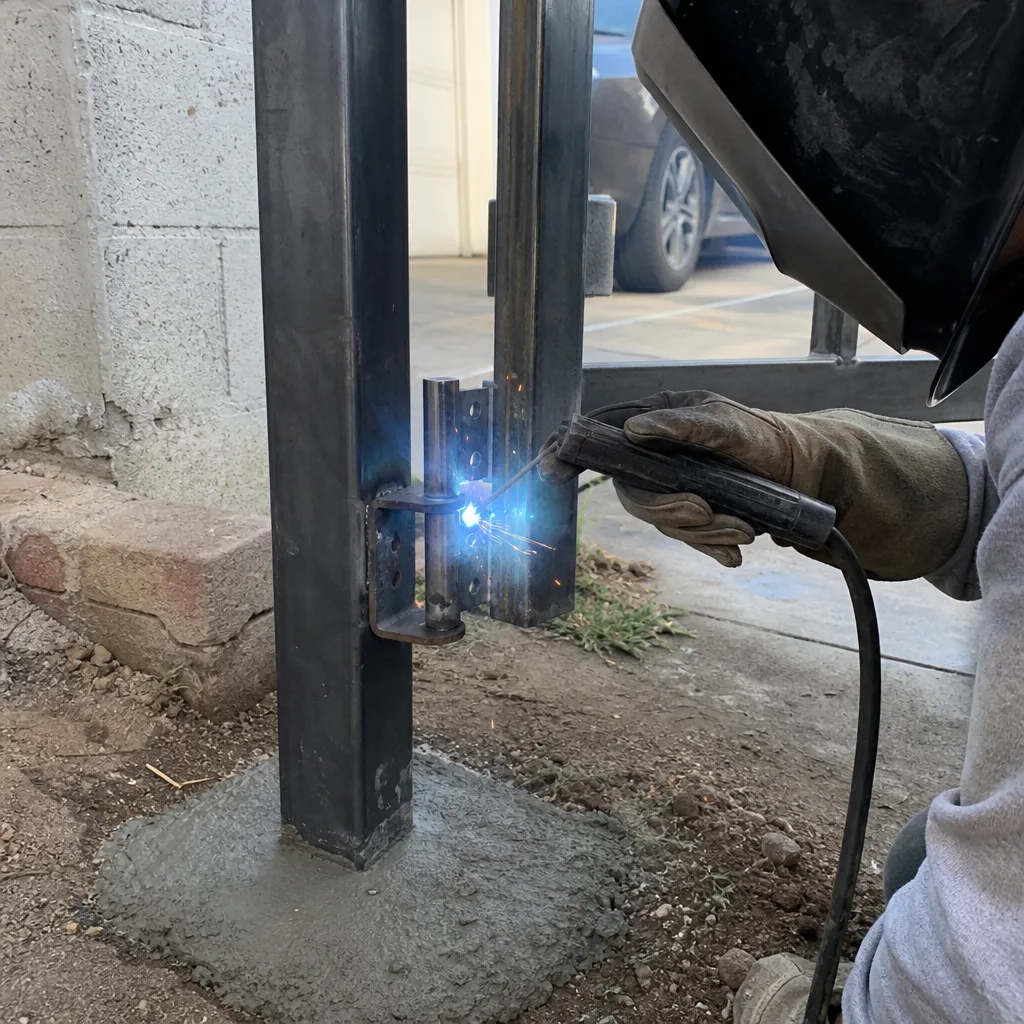
California gate permits aren’t a mystery once you understand the like-for-like replacement doctrine. Repairing or replacing what’s already there is usually fine. Changing what the gate does, how it’s powered, or how it interacts with the property line is where permits enter the picture. The homeowner carries the liability either way, and the difference comes down to whether anyone documented the distinction before the work began. For more guides & resources on gate compliance, visit our blog. In Inglewood, the smartest move is to hire a contractor who puts the classification in writing, keeps a photo record of the finished work, and can answer a building inspector’s questions in five years as easily as the day the job was done.
Written by Adrian Vance, Owner at Vance Gate Repair Inglewood, serving Inglewood since 2014.