
Last updated September 20, 2026
Free on-site gate assessment - hinges, posts, and your LiftMaster or Nice gate operator checked before anything is quoted
The assessment is free and the quote is the invoice.
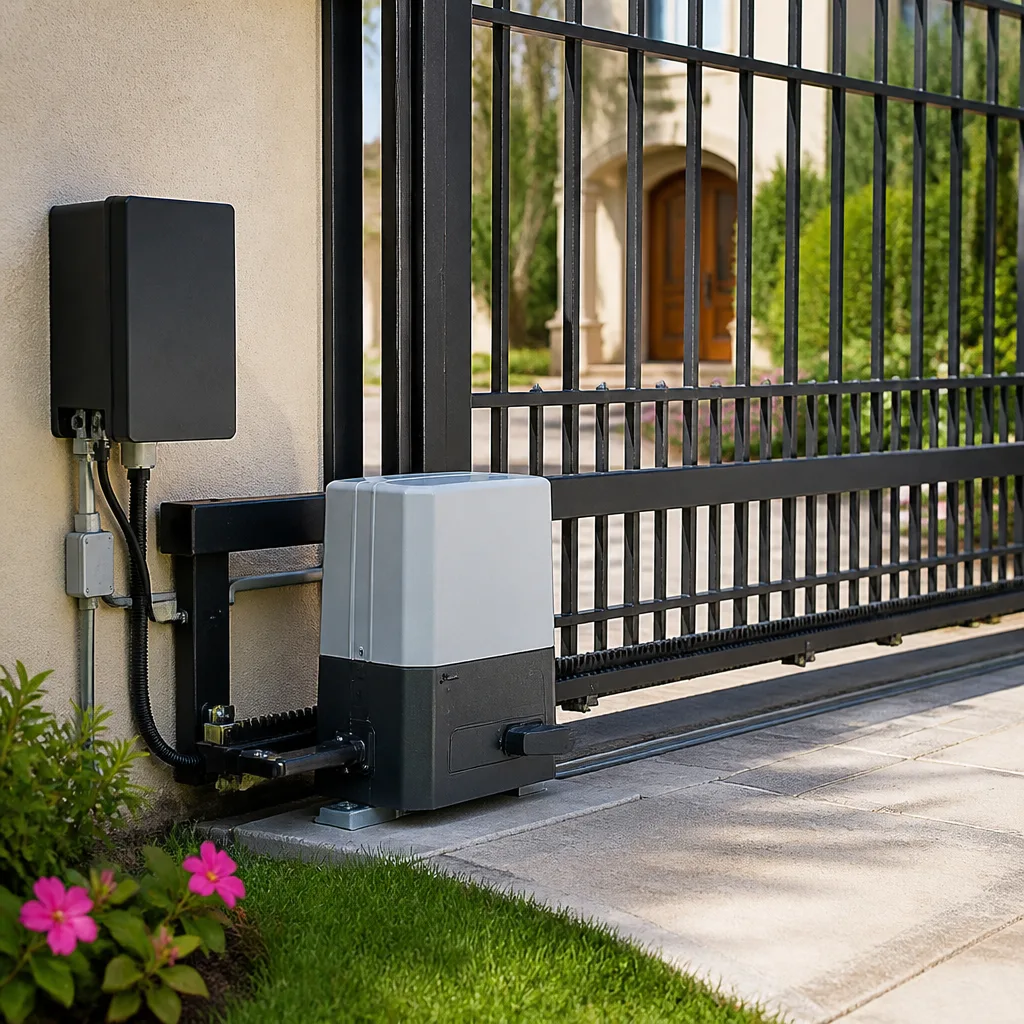
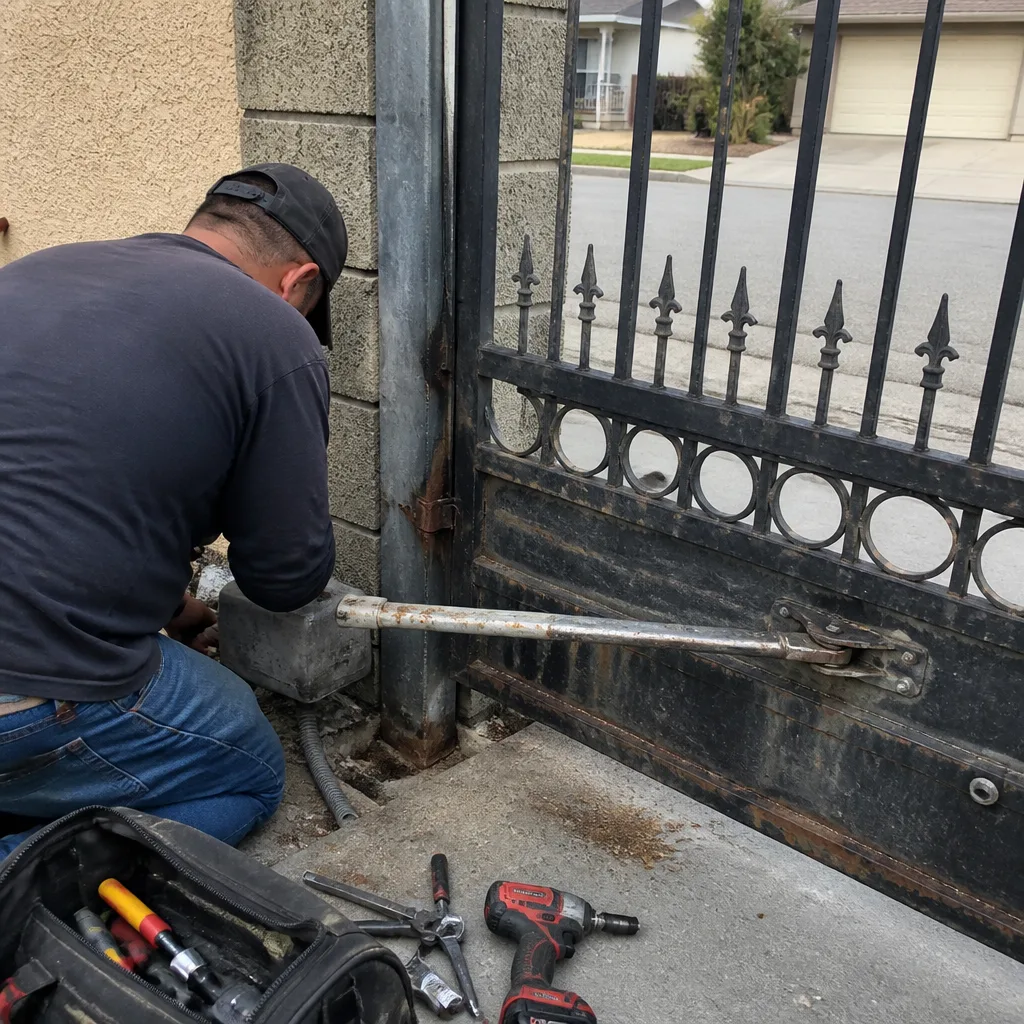 Before
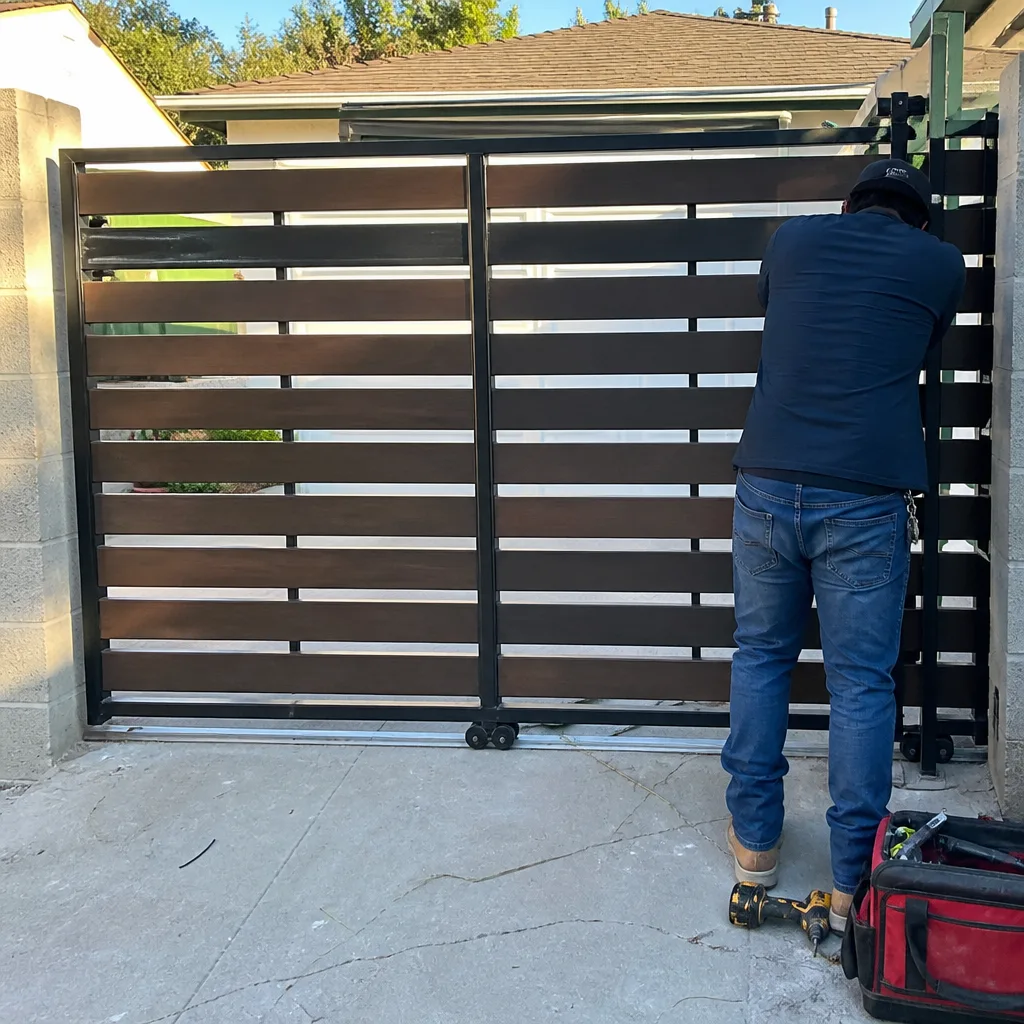 After
After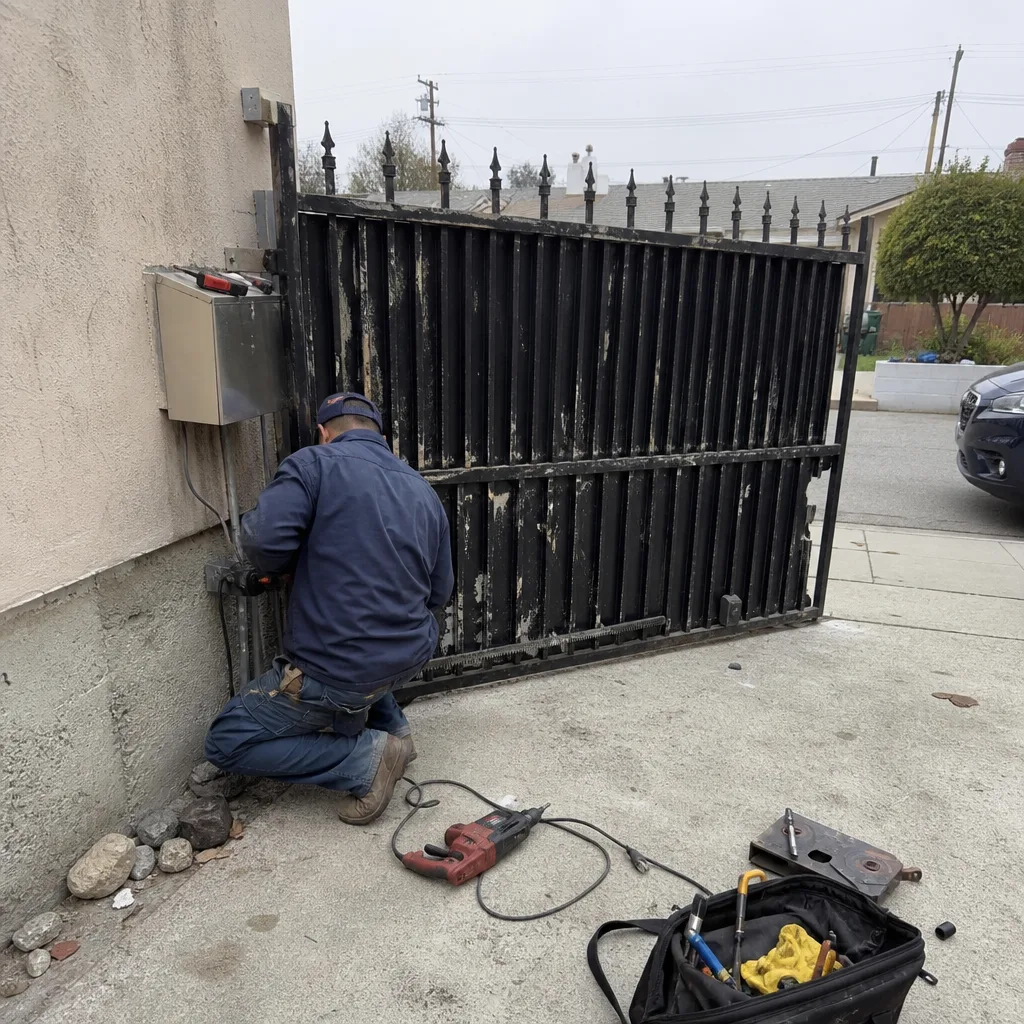 Before
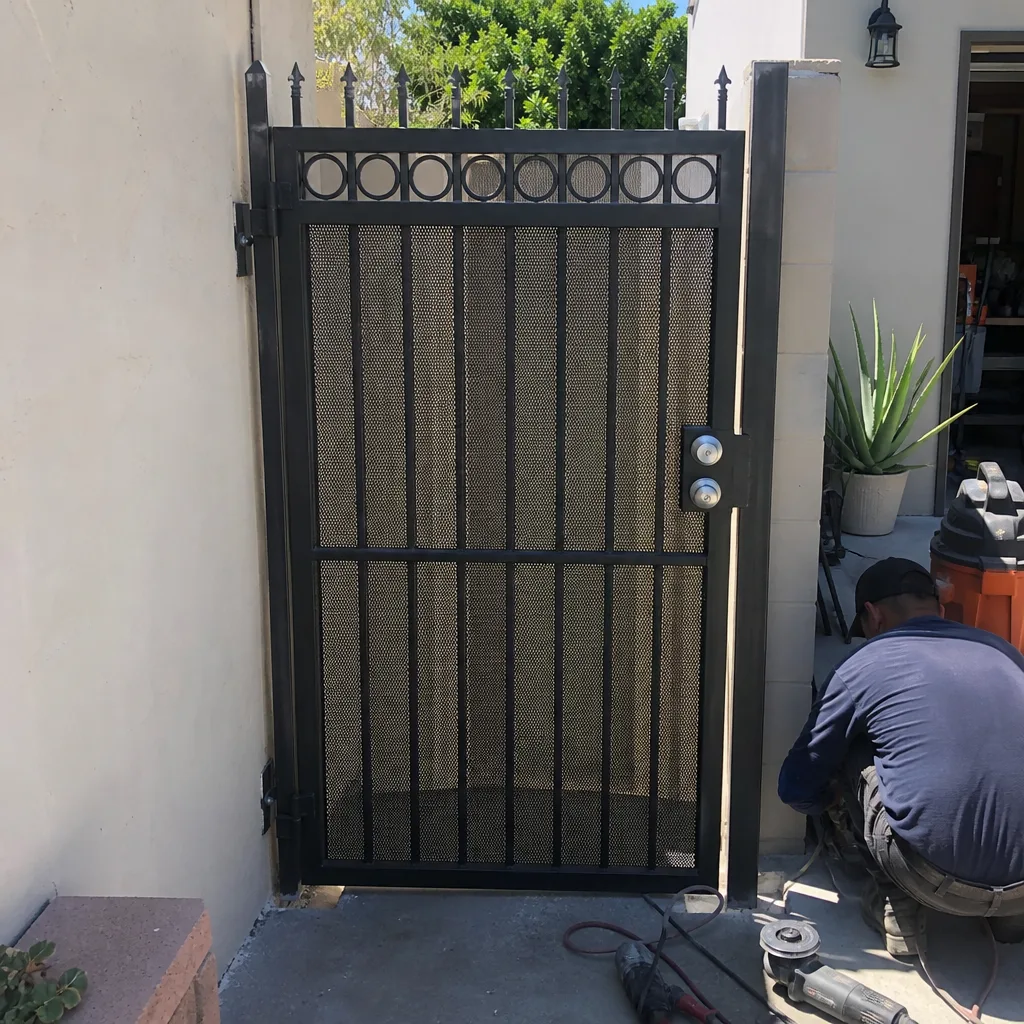 After
After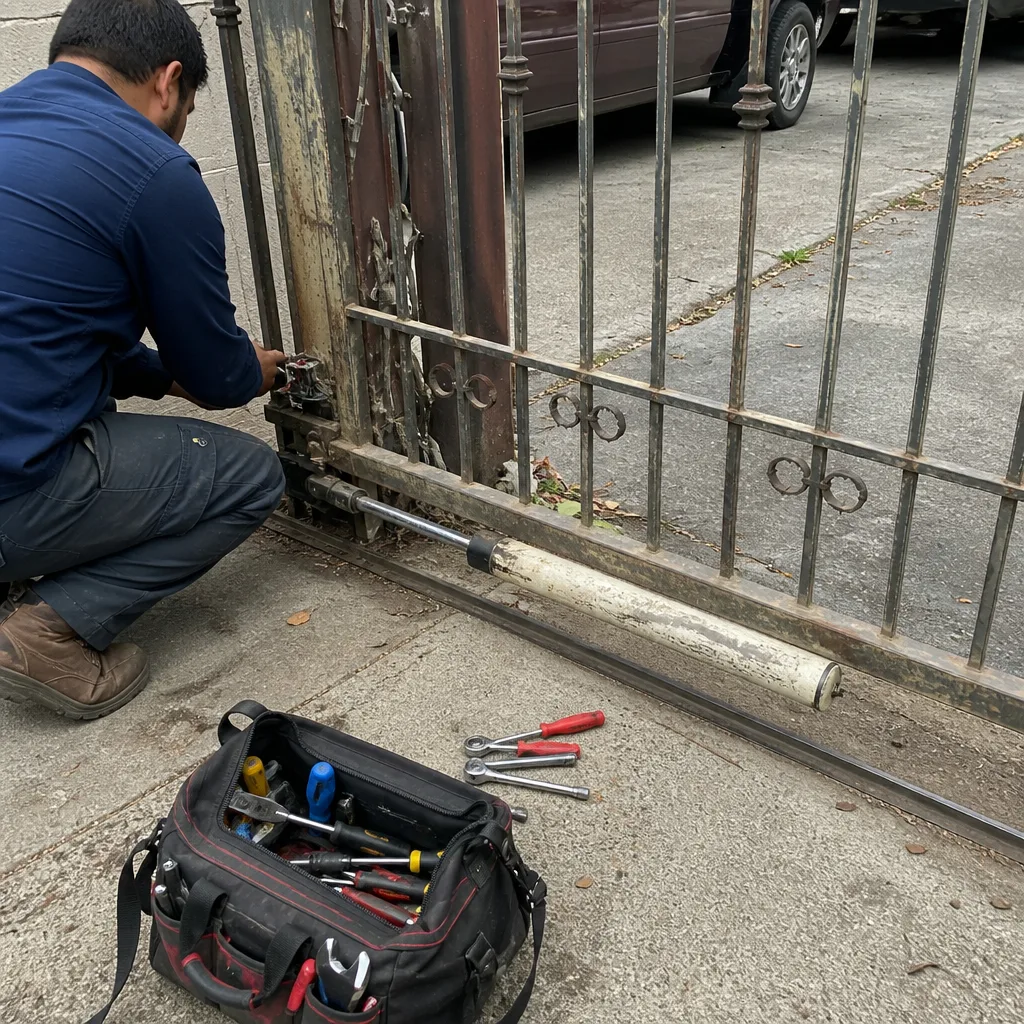 Before
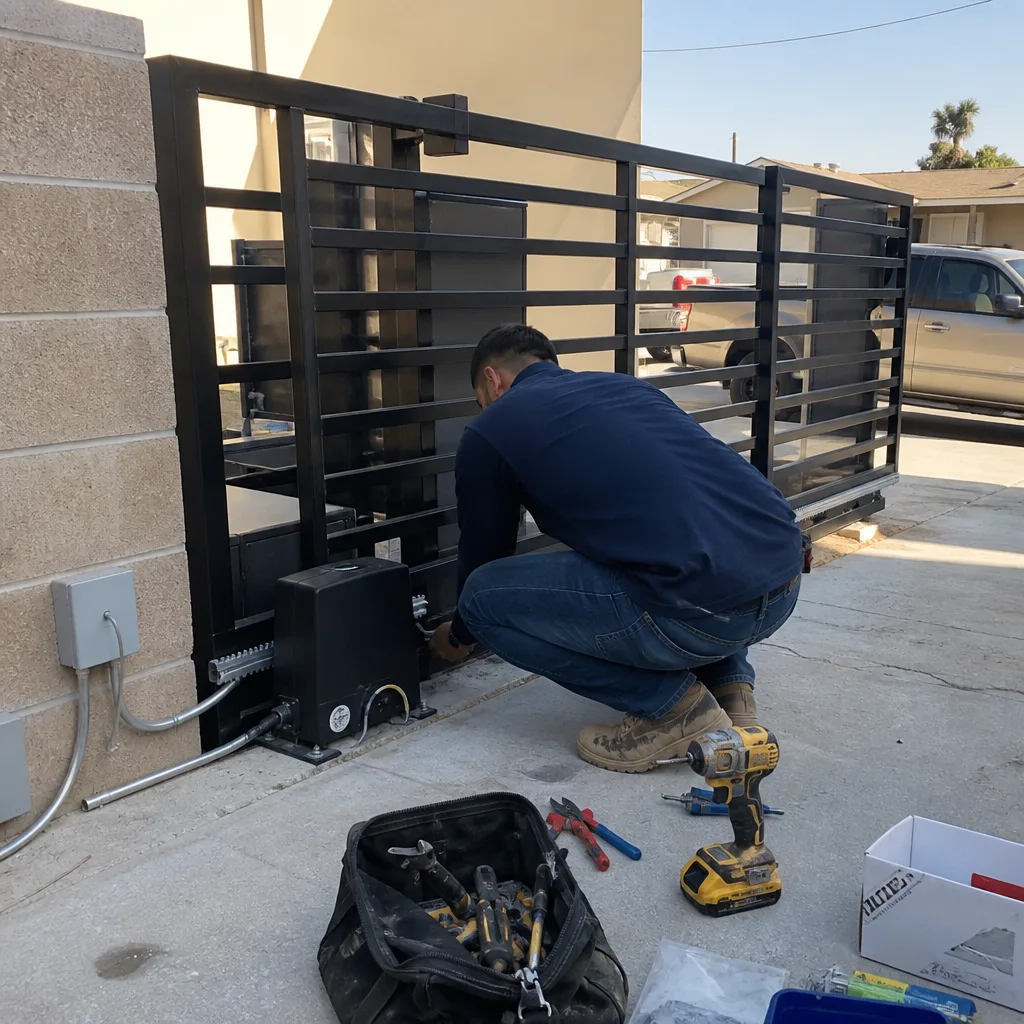 After
AfterSeasonal Gate Repair Care for Inglewood: Year-Round Homeowner’s Guide
Inglewood’s gate repair season doesn’t peak in winter. It peaks in November, after six months of coastal heat and dry air have been quietly working on every hinge, every weld, every circuit board, and every cable in your gate system. The first strong Santa Ana of fall is when gates that worked fine in June start sagging, binding, or refusing to close. This guide covers the two weather cycles that actually drive gate wear in Inglewood, what to check month by month, and how keeping a simple inspection record will cut your long-term gate repair costs roughly in half.
Quick Answer
Seasonal gate maintenance in Inglewood works best when it follows the area’s two real stress cycles rather than a fixed calendar: inspect for thermal expansion damage and Santa Ana wind loading before the fall winds arrive, and check for marine-layer moisture and salt deposition on electronics and hardware after the fog season pulls back. A homeowner who checks these specific failure points on a biannual rhythm, keeps a dated photo record of what they find, and fixes small wear items early will typically spend far less than someone who waits for the gate to stop moving.
Table of Contents
- The Two Cycles That Actually Matter in Inglewood
- Santa Ana Winds and Swing Gate Loading
- Marine Layer, Salt Film, and Control Board Corrosion
- Why Gates Six Miles Apart in Inglewood Behave Differently
- Month-by-Month Gate Inspection Reference for Inglewood
- Post-Rain Inspection Protocol and What Standing Water Signals
- How to Keep a Seasonal Gate Inspection Record
- Common Mistakes to Avoid
- When to Call a Professional
- Frequently Asked Questions
- The Bottom Line
BeforeAfterThe Two Cycles That Actually Matter in Inglewood
Inglewood doesn’t get snow, deep freezes, or monsoon season. What it gets is a long dry stretch of thermal expansion, followed by a shorter period of moisture and salt air. Understanding these two cycles changes how you approach gate care entirely.
The first cycle runs from late spring through early fall. Temperatures climb into the 80s and 90s routinely, and the inland sun works on metal all day. Steel expands. Aluminum expands faster. Weld joints that were sound when they were made flex thousands of times between cool mornings and hot afternoons. The gate that was aligned in April can be bound against a post by September, not because anything “broke” but because the geometry moved.
The second cycle runs from late fall into early spring. The marine layer settles in overnight, often reaching inland past the 405 and toward the Forum. Salt from the Pacific rides in with that fog. It settles on exposed metal, on control board terminals, and inside unsealed motor housings. Over repeated cycles, salt film plus moisture creates the conditions for corrosion and electrical faulting.
If you only take one thing from this guide, take this: service your gate at the end of each cycle, not on an arbitrary calendar. Late October and early April are when the damage each cycle produces is most visible and easiest to fix cheaply. For broader context on how these cycles affect gate systems in the city, see our Gate Repair in Inglewood page.
Santa Ana Winds and Swing Gate Loading
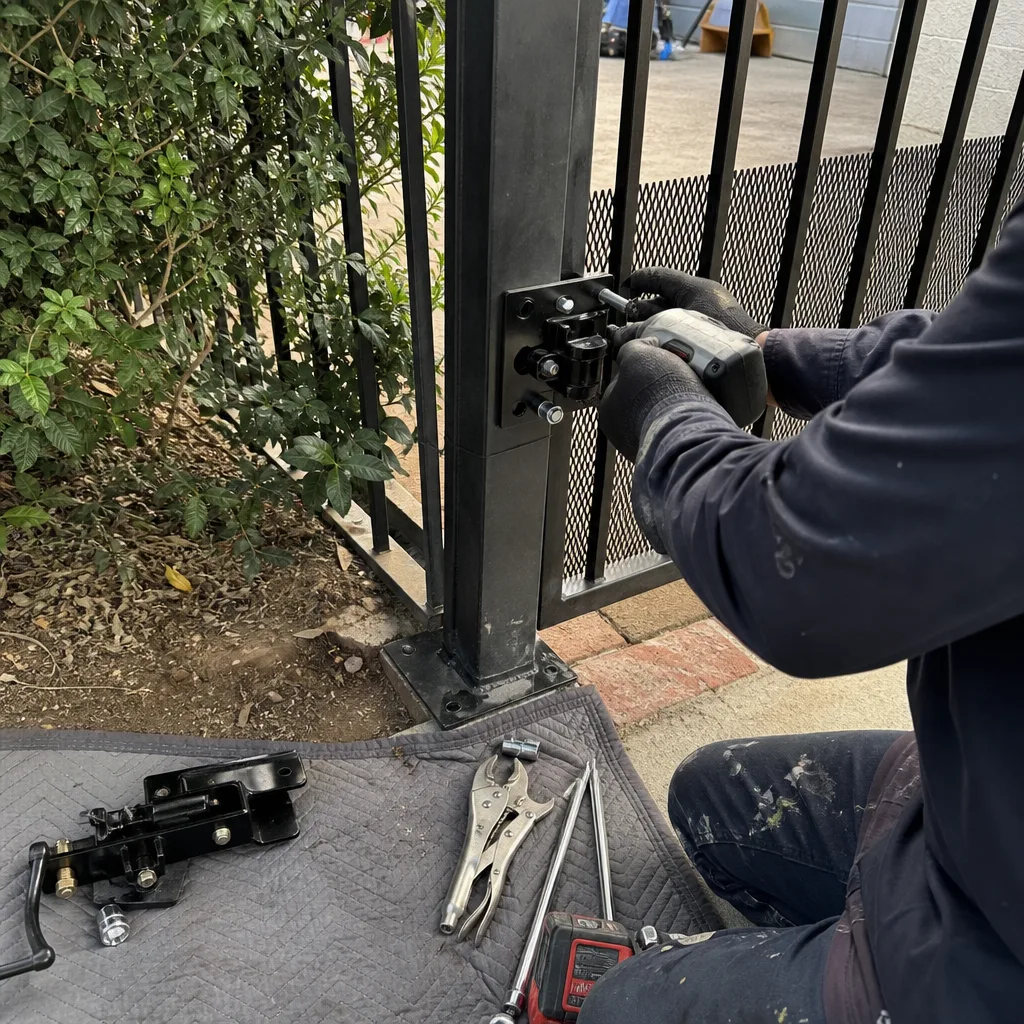
Santa Ana winds are the single most destructive weather event for Inglewood gate systems. They arrive most often between September and November, but they can hit any month from fall through early spring. Wind speeds in Inglewood during Santa Ana events routinely hit 25 to 40 mph, with gusts higher. What matters for your gate is not the average wind speed, but the load placed on a solid-surface swing gate when a 40 mph gust hits it broadside.
A six-foot-tall, twelve-foot-wide solid wood or composite gate presents a large sail area. In a 40 mph gust, that surface can experience hundreds of pounds of sudden lateral force. The force transmits through the gate leaf, into the hinge welds, through the posts, and into the footing below grade. If any one of those connections is already fatigued, a Santa Ana is when it reveals itself.
We see the same failure pattern in Inglewood after nearly every strong wind event, in neighborhoods from Morningside Park to Century Heights:
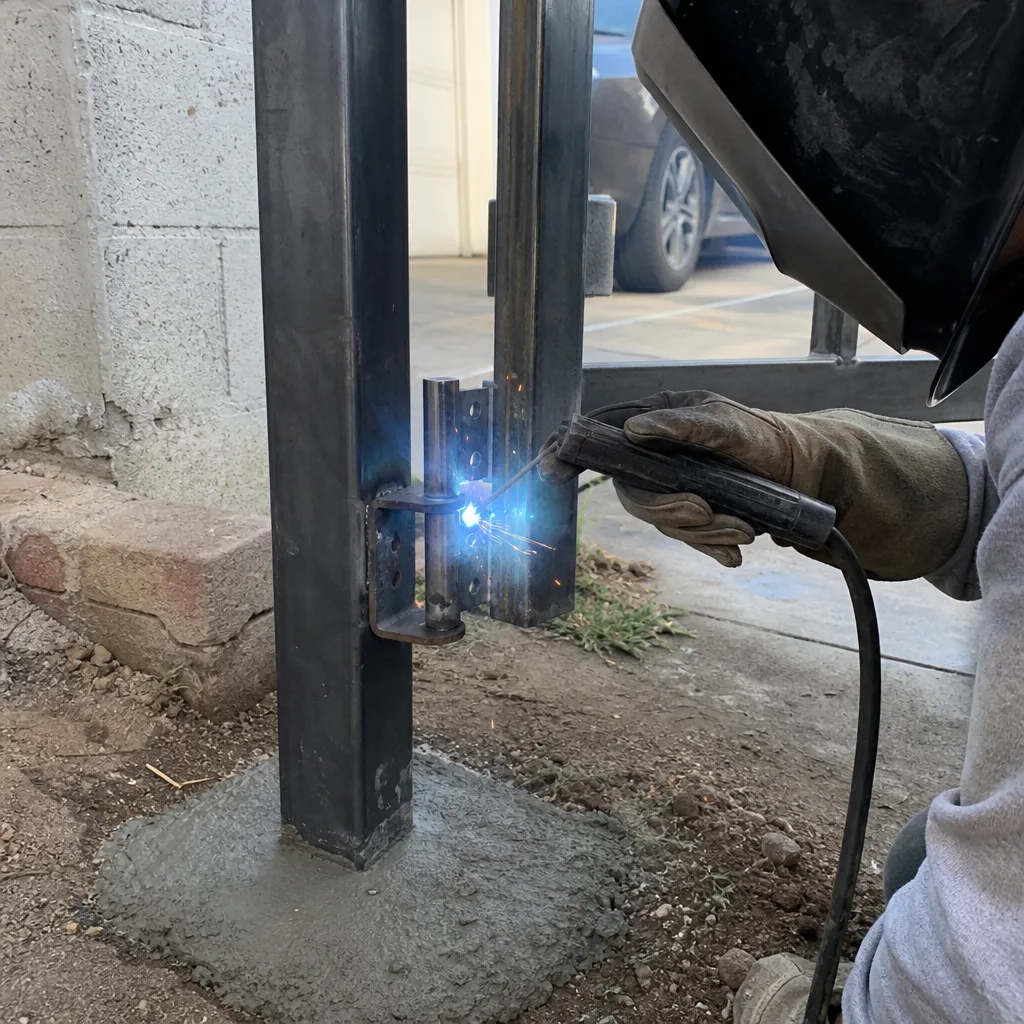
- Upper hinge weld fractures. The top hinge carries more load than the bottom hinge under wind pressure because the top of the gate flexes further. A hairline crack at the weld looks cosmetic until the gate drops a quarter inch and starts dragging.
- Gate sag symptoms. After a wind event, the latch side of the gate may sit visibly lower. You’ll notice the latch no longer lines up cleanly with the receiver. This is the first outward sign of hinge fatigue or post movement.
- Post lean or base-cracked concrete. If you see a fresh crack in the concrete at the base of a gate post after heavy wind, the footing is moving. That’s a structural issue, not a gate hardware issue, and it should be documented and addressed before it worsens.
- Operator arm binding. On automated swing gates, the operator arm that pushes the gate open can bind when the gate shifts out of plane. The motor draws more current fighting geometry, and the control board overheats. This is a common precursor to motor failure in Inglewood.
What to check before Santa Ana season: grab the gate at the latch side and attempt to lift it. Movement of more than a quarter inch at the hinges indicates wear. Look at the hinge welds with a flashlight; hairline cracks are visible if you look. Note any fresh concrete cracking at the post bases. Listen to the operator when it cycles; a motor that suddenly sounds labored is often fighting a gate that has already shifted. For installations that need attention, our Gate Installation in Inglewood service covers replacement of worn post footings, hinge rebuilds, and structural corrections.
Marine Layer, Salt Film, and Control Board Corrosion
The marine layer in Inglewood is most persistent from late spring into early fall, but it can arrive any morning of the year when conditions are right. It moves inland from the coast, often reaching Inglewood in the overnight and early morning hours before burning off by midday. It leaves behind two things: moisture and a fine salt film.
That salt film is what causes control board failures. Your gate control board is a printed circuit board with exposed metal terminals, solder joints, and tiny surface-mount components. Salt is hygroscopic, meaning it draws moisture from the air. Once salt deposits build on a board, the board effectively lives in a micro-climate of elevated humidity even when the surrounding air feels dry. Corrosion starts at the terminals and works inward. What we typically find on gate control boards that have lived without protection through several Inglewood fog seasons is white or green crust forming on the terminal blocks, lifted solder joints, and eventually, components that stop conducting.
The marine-layer inspection protocol:
- Kill power to the gate system at the breaker before opening any enclosure.
- Open the control box and look at the terminal block where the AC power, battery, and accessory wires connect. White, green, or powdery deposits are salt corrosion.
- Inspect the back of the control board for dark spots or pitting on solder joints.
- Check the photo-eye lenses (the infrared beam that stops the gate if something crosses the path) for a cloudy film. Salt haze on the lens can cause intermittent faults.
- If you see corrosion, photograph it and record the date. Do not scrape or wire-brush a live board. A technician can assess whether the board can be cleaned or needs replacement.
Marine-layer salt affects more than electronics. It also accelerates rust on raw steel surfaces, on chain drives, and on hinge pins that have lost their lubricant. In our experience serving Inglewood, we’ve found that homes within a mile of the 405 and east of it experience noticeably less salt deposition than homes west of the freeway, but the difference is one of degree, not kind. Salt gets across the 405 readily when the fog pushes in. For automated systems showing corrosion-related faults, our Gate Motor & Opener in Inglewood coverage includes control board diagnosis and replacement across major brands including LiftMaster, FAAC, BFT, and DoorKing.
Why Gates Six Miles Apart in Inglewood Behave Differently
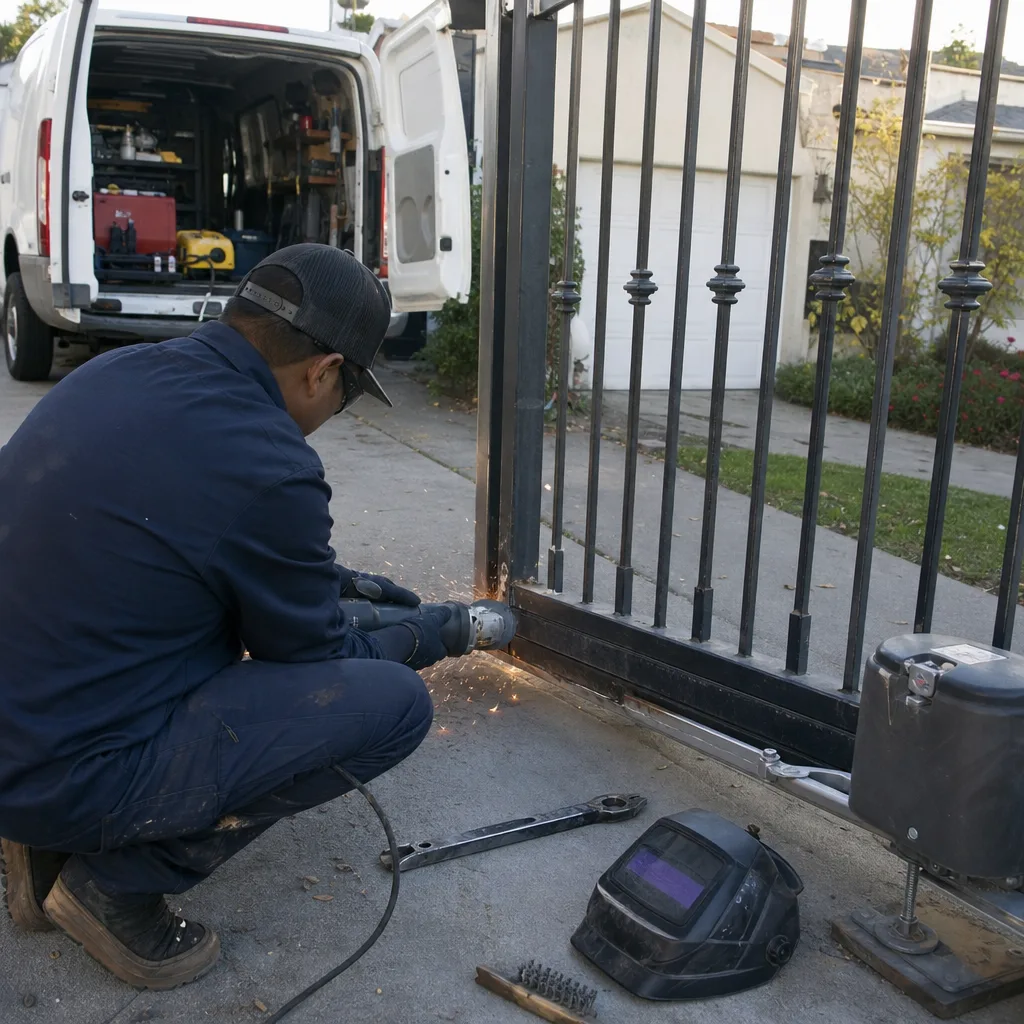
Inglewood is a compact city. It’s roughly five miles from its western edge, near the intersection of La Cienega and Manchester, to its eastern edge, bordering the 110 and the Forum. But within those five or six miles, there’s a meaningful temperature gradient that changes how gates behave.
Western Inglewood, closer to the 405 and the coast, gets the marine layer sooner and keeps it longer. Morning lows are cooler. Thermal expansion on metal gates is less extreme because the daily temperature swing is smaller, often only 15 to 20 degrees. The dominant stressor on Western Inglewood gates is moisture and salt. Hinges rust, control boards corrode, and chain drives on slide gates develop surface rust faster.
Eastern and inland-facing Inglewood, around the Forum, Morningside, and the commercial corridor along Century Boulevard, sits further from the marine influence. The sun lands harder and the fog burns off earlier. Daily temperature swings of 25 to 35 degrees are common in the summer. The dominant stressor on inland Inglewood gates is thermal cycling. Every weld, every bolted joint, and every section of rail expands and contracts on that 30-degree swing. The same gate model installed on a home near the 405 and on a home near the Forum will show different failure profiles within two years: the coastal-side gate will show more corrosion, and the inland-side gate will show more fatigue cracking.
This matters for maintenance because it means there is no universal “Inglewood gate care” schedule. If your property sits inland-facing, you should be inspecting hinges and welds for thermal fatigue before corrosion becomes a concern. If you’re west of the 405, you should prioritize electrical inspection and corrosion prevention. Both gates need both types of care, but the order of priority reverses depending on which side of the city you live in.
If you’re not sure what your gate has been through historically, start with a documented inspection. At Vance Gate Repair Inglewood home, every inspection includes a photo record of what was found, so you can see the condition evidence for yourself rather than taking anyone’s word for it.
Month-by-Month Gate Inspection Reference for Inglewood
This is the section to bookmark. It follows the two real stress cycles described above, not a generic four-season calendar that doesn’t apply to Southern California. Use it as a reference for what to check each month, and which components are under the most stress during each period, or explore more guides & resources on gate maintenance.
January and February (Marine-layer season, cool and often wet)
Dominant stressors: moisture, salt film, brief rain events.
- Control board and terminals: Highest priority. Look for corrosion and condensation inside the control enclosure.
- Photo-eye function: Fog and rain can cause intermittent faults. Clean the lenses with a dry cloth.
- Hinge lubrication: Cold moisture combined with existing wear accelerates rust. Inspect for surface rust and address it early.
- Post-base drainage: Check that water flows away from the gate post bases after rain.
March (Transition, fog receding)
Dominant stressors: lingering moisture, early thermal cycling.
- Full corrosion inspection: This is the best month for it. The wet season’s deposits are visible, and the weather is mild enough to work comfortably.
- Motor gearbox inspection: Check for evidence of moisture ingress during the winter months.
- Weld inspection on swing gates: Thermal cycling has started but hasn’t peaked. Look for early hairline cracks.
April and May (Spring transition, warming begins)
Dominant stressors: first real thermal expansion, morning fog still present.
- Gate alignment check: As temperatures climb, a gate that was aligned during winter may begin binding. Check the latch alignment.
- Operator force settings: If the gate is binding, the motor may need more force to complete its travel. A motor working harder than designed is a precursor to failure.
- Track debris on slide gates: Wind-blown debris accumulates in the track during spring. Clear it early before it packs down.
June through August (Peak heat, maximum thermal expansion)
Dominant stressors: prolonged high temperatures, daily thermal cycling of 25 to 35 degrees inland.
- Hinge and weld fatigue: This is the highest-risk period for weld cracking on inland-facing properties.
- Motor overheat: Gate motors in direct sun, especially in hardscape areas without shade, can overheat during peak afternoon operation. Listen for changes in motor pitch.
- Battery backup health: High heat degrades sealed lead-acid batteries faster. If your gate has a battery backup, summer is when it fails first.
September and October (Santa Ana pre-season)
Dominant stressors: wind loading, continued thermal stress, falling debris.
- Hinge inspection at maximum fatigue: After a full summer of thermal cycling, inspect hinges and welds with a flashlight before the winds arrive.
- Wind-loading check: If your swing gate has a solid surface, confirm the operator arm and hinges are sound before Santa Ana season.
- Track and roller cleaning on slide gates: Clean and lubricate. A slide gate with dirty tracks will bind under wind pressure.
November (Santa Ana peak)
Dominant stressors: high wind loading, sudden gate movement, flying debris.
- Post-wind-event inspection: After each strong Santa Ana, check for gate sag, post lean, fresh concrete cracking at bases, and operator binding.
- Control board protection: If your control box is exposed to blowing dust and debris, confirm its enclosure seal is intact.
- This is the month we see the most repair calls in Inglewood. If you notice anything wrong after a wind event, address it before it cascades into motor failure.
December (Post-wind, cool, some rain possible)
Dominant stressors: wind-related damage from November, early rain events.
- Repair any wind-loading damage found in November. Hinge cracks and post movement don’t self-correct; they get worse every cycle.
- Post-rain drainage check: If the first rain of winter fell, inspect post bases for standing water.
- Full operator test: Cycle the gate five times in a row and listen for laboring, grinding, or changes in speed.
Post-Rain Inspection Protocol and What Standing Water Signals
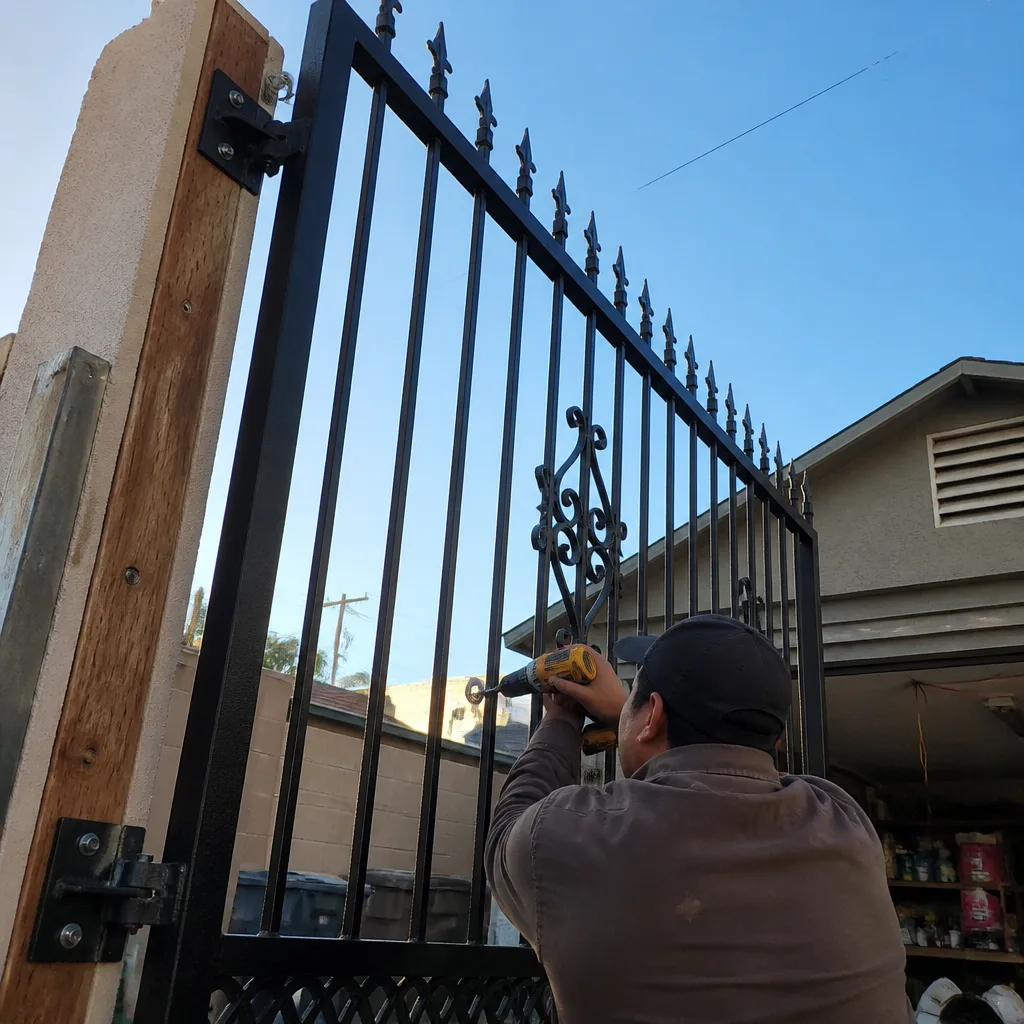
Rain doesn’t fall in Inglewood often, but when it does, it reveals things that dry weather hides. Standing water near a gate post base after rain is not a minor cosmetic issue. It’s evidence about your footing.
A gate post set in a concrete footing should shed water away from its base. When water pools next to a post instead of draining, one of two things is happening:
- Grade settlement: The area around the footing has settled over time, creating a low spot that collects water. This is common in Inglewood’s older neighborhoods, where soil compaction and decades of irrigation changes have shifted the surface profile.
- Footing failure or post movement: The post is leaning or the footing has cracked, changing the surface drainage pattern around the base. This is more serious and indicates the gate’s structural anchor is compromised.
Post-rain inspection steps:
- Wait one day after the rain stops. The ground should still be visibly damp but not actively draining.
- Walk the full length of the gate system, looking for standing water or wet patches concentrated near post bases.
- Photograph any standing water from two angles: directly overhead and from the side. Date the photos.
- Check the post itself for movement. Push against it with your body weight. A sound post doesn’t move; a failing one flexes or shifts.
- Check for fresh cracks in the concrete or soil around the base. Document any new cracking.
- If water is pooling near an automated gate’s underground operator or a slide gate’s track, check the electrical enclosure for signs of moisture ingress.
Standing water near a post base, documented over two or more rain events, is a record that something is changing. That record becomes the evidence you need to decide whether a footing repair or post replacement is warranted. If you don’t keep a record, every rain looks like the first rain, and problems compound unnoticed.
How to Keep a Seasonal Gate Inspection Record
Most homeowners don’t keep a gate inspection record because no one has ever told them what to record. It’s not complicated. It takes five minutes per season. What it does is eliminate the single most expensive hidden cost in gate ownership: paying a technician to rediscover what a previous technician already found.
Here’s what a useful seasonal gate inspection record looks like:
- Date and weather context. Write down the date, approximate temperature, and whether you’re inspecting after a wind event, after rain, or during a dry stretch.
- Photos. Take a minimum of four photos every inspection: both hinges on a swing gate, the latch side, the control board, and the full gate from straight on. For slide gates: both ends of the track, the roller assembly, the control board, and the full gate.
- Measurements. Measure gate-to-ground clearance at both ends of the gate leaf. A drop of more than a quarter inch from your baseline reading indicates hinge wear or post movement.
- Observations. Write down anything you noticed: unusual motor sounds, binding, sag, visible rust, corrosion at terminals, latch alignment issues.
- Actions taken. What did you clean, lubricate, adjust, or repair? Write it down.
Store the record somewhere you’ll always have access to it, not in a filing cabinet that gets lost. A digital folder with dated photo files works. A simple spiral notebook kept in the garage works. What matters is that it exists and that it has dates.
When a technician comes to service your gate, show them the record. Every decent technician will appreciate it. In our work at Vance Gate Repair Inglewood, we leave a documented photo record on every visit, specifically so that no future technician has to guess what was done and no homeowner has to pay to rediscover a known condition. Your own seasonal record extends that same principle, and it costs you nothing.
Common Mistakes to Avoid
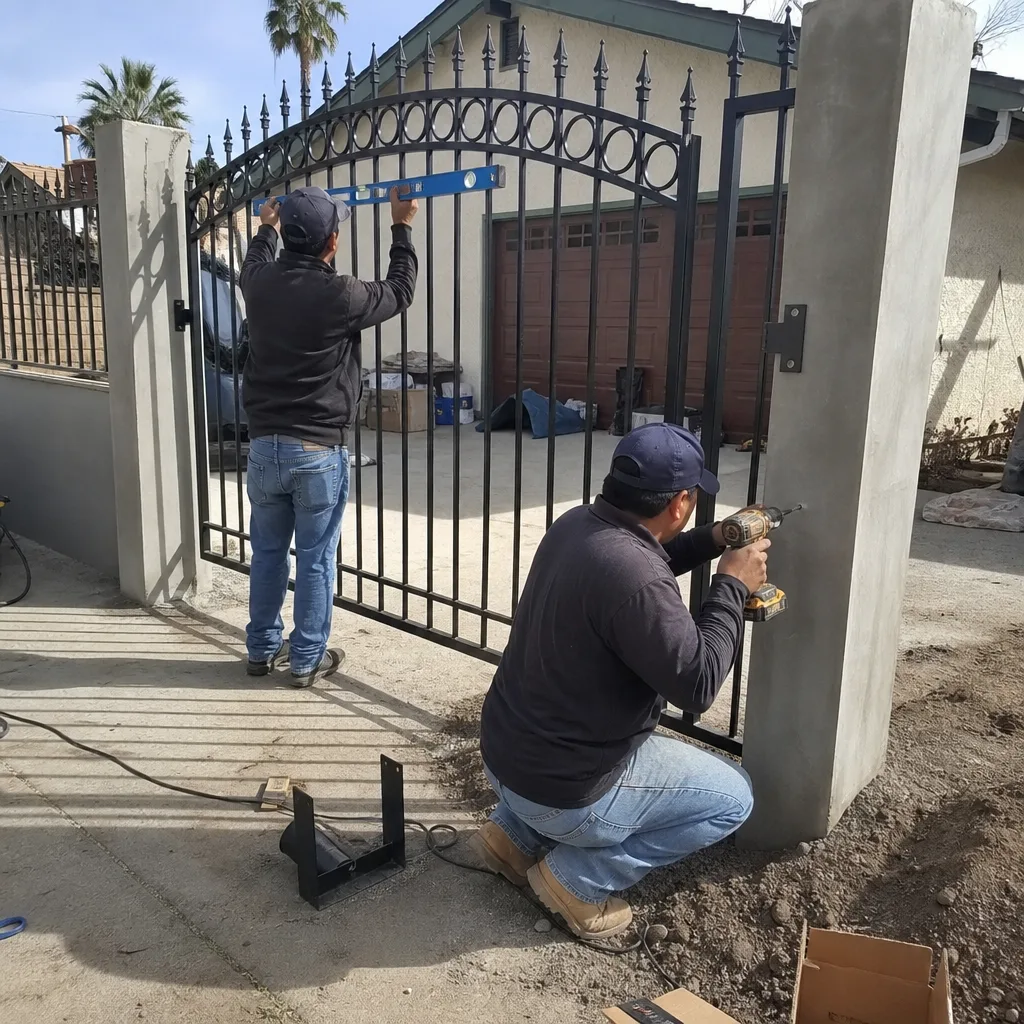
- Lubricating without cleaning first. Applying fresh lubricant over dirt and salt film traps grit against the bearing surface and accelerates wear. Clean the surface with a rag, then lubricate. On Inglewood gates subject to marine-layer salt, this matters more than most people realize.
- Ignoring a noisy gate because it still works. A gate that makes a new sound is telling you something changed. Motors don’t give warnings twice. If the gate suddenly sounds labored, grinding, or whiny, that sound is the cheapest diagnostic you’ll ever get. Investigating it then costs less than replacing a burned-out motor later.
- Running a text-message or email “deal” from a company that has never seen your gate. A gate motor replacement price quoted without anyone looking at the existing arm bracket, the hinge condition, or the control board tells you nothing about what the job will actually cost. In Inglewood, where thermal fatigue and salt corrosion both act on the same system, the condition of the surrounding hardware determines whether a “cheap” motor replacement is a bargain or the first payment on a larger failure.
- Power-washing the gate and control box. Directed high-pressure water forces moisture past enclosure seals and into motor housings. It also drives salt into crevices. Use a garden hose with low pressure and avoid spraying electrical enclosures directly.
- Waiting for the gate to stop moving before getting an inspection. Gates don’t fail suddenly for no reason. They degrade gradually: a quarter inch of sag, a terminal getting crusty, a motor drawing more current. By the time the gate won’t open at all, the repair is a cascade of failures that would have been cheaper to address one at a time.
- Assuming all gate companies are equivalent because the price was low. In gate work, price differences usually reflect what’s included: whether the technician documents what they found, whether the written price covers the full scope, whether the work carries a real warranty. If a company won’t put the price in writing before starting, it means the price can change.
When to Call a Professional
High-tension gate springs, under-load cables, and motor capacitors carry real energy. A gate spring under tension can release suddenly and cause serious injury. Gate systems also involve line-voltage wiring. If you find a broken spring, a snapped cable, a control board with significant corrosion, a post that moves when you push it, or a motor that sparks, buzzes without moving, or smells of burnt insulation, stop and call someone who does this work daily.
Beyond the dangerous stuff, there’s a practical line. If you’ve checked the basics, lubricated properly, and the gate is still binding, sagging, or faulting, the problem is likely mechanical or electrical, not cosmetic. A professional inspection costs less than you’d think, and it gives you a written record of exactly what’s wrong and what it will cost to fix. If you’re weighing whether to tackle issues yourself, read DIY vs Professional Gate Repair: The Inglewood Homeowner’s Decision Guide.
Vance Gate Repair Inglewood offers free estimates in Inglewood. The price is written and handed to you before any work starts, and every visit includes a photo record of what was found. Call (424) 380-7998 to schedule an inspection.
Frequently Asked Questions
For most Inglewood gates, a thorough inspection twice a year is sufficient: once in early spring after the marine-layer season and once in early fall before Santa Ana winds arrive. Gates that operate more than 15 cycles per day, or gates on commercial and light commercial properties, benefit from quarterly inspections. A live person answers at Vance Gate Repair Inglewood around the clock at (424) 380-7998 if you’d like help setting up a schedule specific to your gate.
Inspection pricing in Inglewood varies by company and by what’s included, but most qualified gate inspection calls in the city run from $75 to $150, and many companies, including Vance Gate Repair Inglewood, credit the inspection fee toward the repair if you proceed with the work. The real cost comparison isn’t the inspection fee; it’s the difference between catching a hinge crack before it fails and replacing a gate leaf plus a motor after it fails. Call (424) 380-7998 for exact pricing.
Yes. Vance Gate Repair Inglewood services nine major gate automation brands, including LiftMaster, FAAC, BFT, Linear, Viking, Ghost Controls, DoorKing, Elite, and Mighty Mule. We work on whatever motor is already on the property rather than steering you toward a replacement unless the existing equipment is genuinely beyond repair.
After a strong wind event, check for these specific signs: the latch side of the gate hangs visibly lower than the hinge side, the latch no longer lines up with its receiver, there’s a fresh crack in the concrete at the base of a gate post, the gate squeaks or scrapes when it opens, or an automated gate opens noticeably slower or labors audibly. Any one of these is reason to get a professional inspection. Call (424) 380-7998 to schedule one.
This is thermal expansion, and it’s common on inland-facing Inglewood properties where the daily temperature swing is 25 degrees or more. The gate’s metal structure expands as the day heats up, and a gate that was aligned within narrow tolerances during a cooler period will bind when everything expands. It’s not a “sometimes” problem; it’s geometry, and it will get worse every season until the underlying alignment issue is corrected.
We can give you a price range for common repairs, but we won’t give a fixed written price until a technician has seen the gate in person. Anyone who quotes a fixed price sight-unseen is either guessing or planning to adjust it later. The written price before any work starts is the entire point of how we operate. Call (424) 380-7998 and we’ll schedule a free estimate.
The Bottom Line
Inglewood gates fail on two cycles: thermal expansion in the summer and salt-and-moisture corrosion from the marine layer. Service them at the end of each cycle, not on an arbitrary calendar. For a deeper look at local repair strategies, see The Complete Guide to Gate Repair in Inglewood. Check for hinge and weld fatigue before Santa Ana season, and check for control board corrosion after the fog season. Document what you find in a simple dated record. Fix the small things early, get a professional for the dangerous things, and don’t accept a gate repair price that isn’t written down before the work starts. Most of the expensive gate repairs we see in Inglewood could have been small repairs six months earlier, if someone had looked.
Call Vance Gate Repair Inglewood at (424) 380-7998 for a free estimate. The price is in writing before any work begins, and you get a photo record of what we found when the job is done.
Written by Adrian Vance, Owner at Vance Gate Repair Inglewood, serving Inglewood since 2014.