
Last updated September 20, 2026
Free on-site gate assessment - hinges, posts, and your LiftMaster or Nice gate operator checked before anything is quoted
The assessment is free and the quote is the invoice.
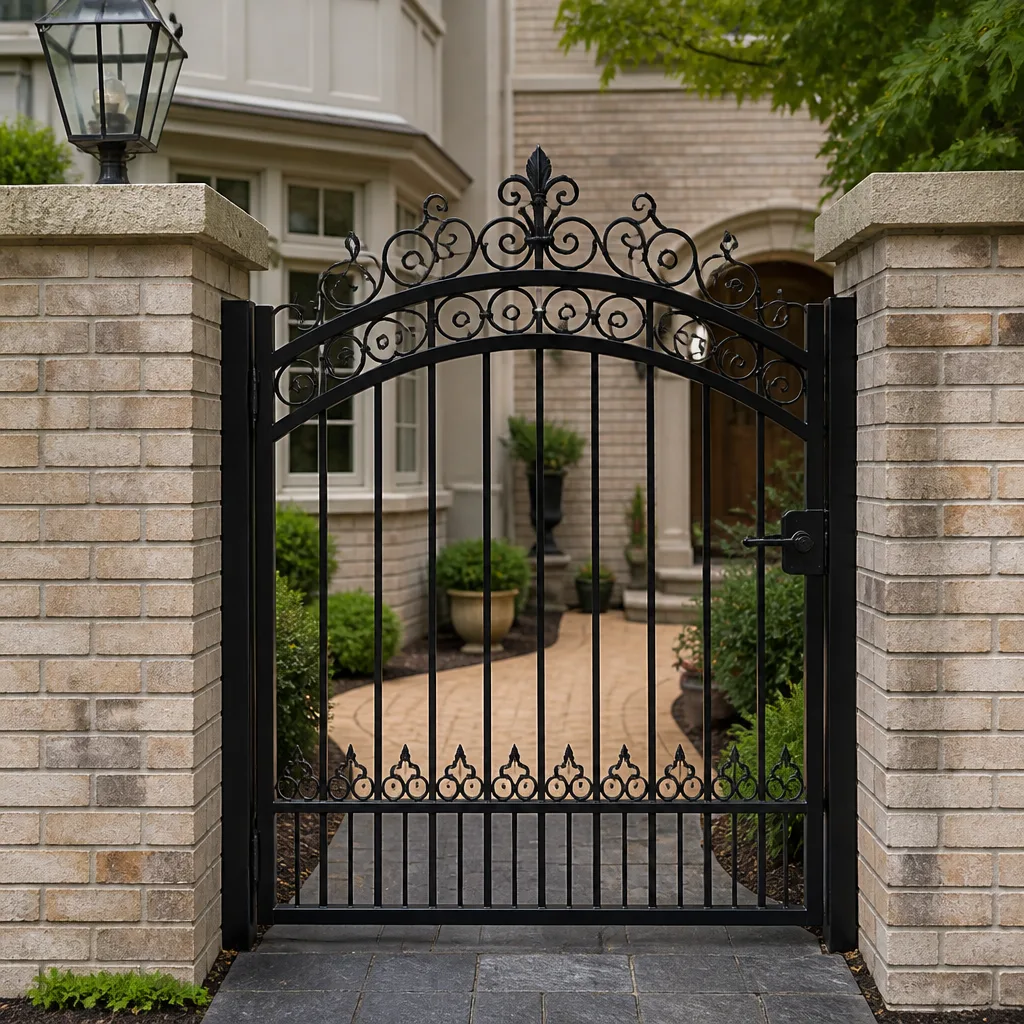
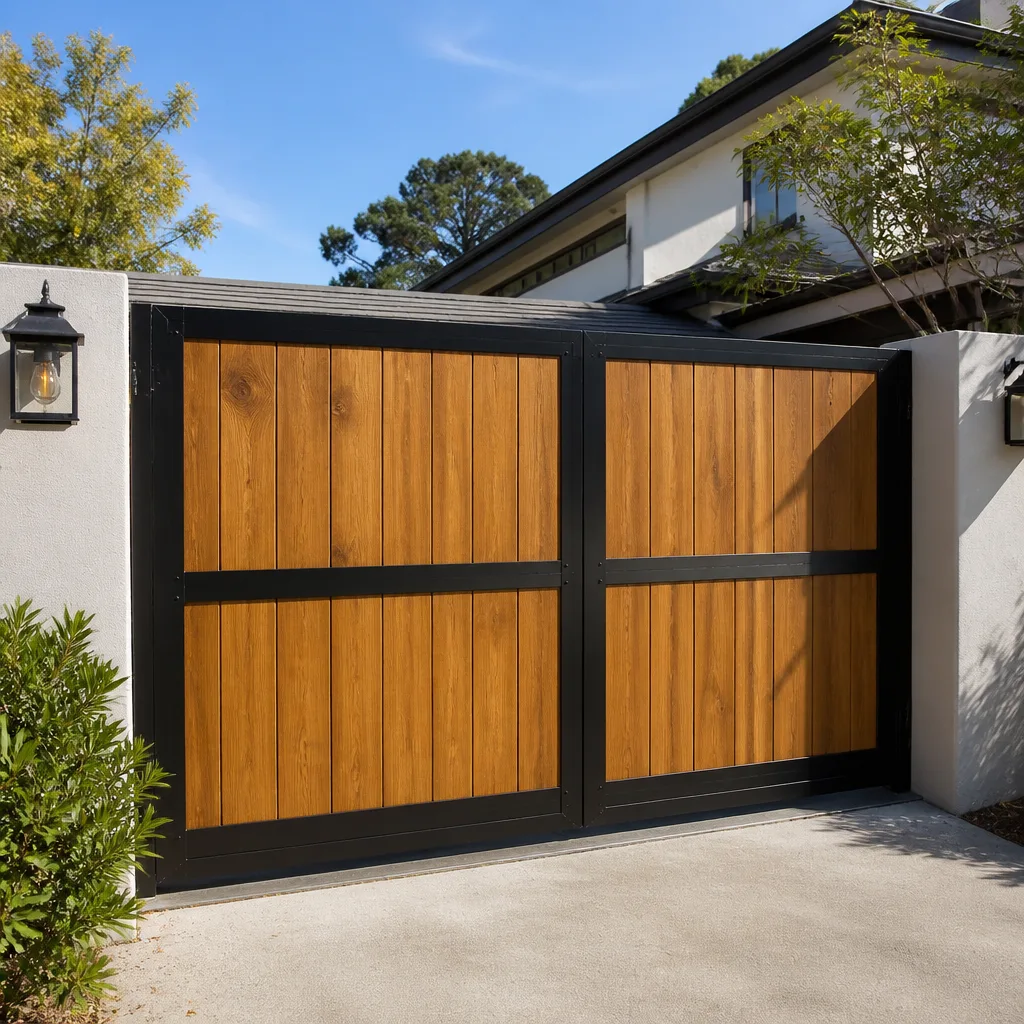
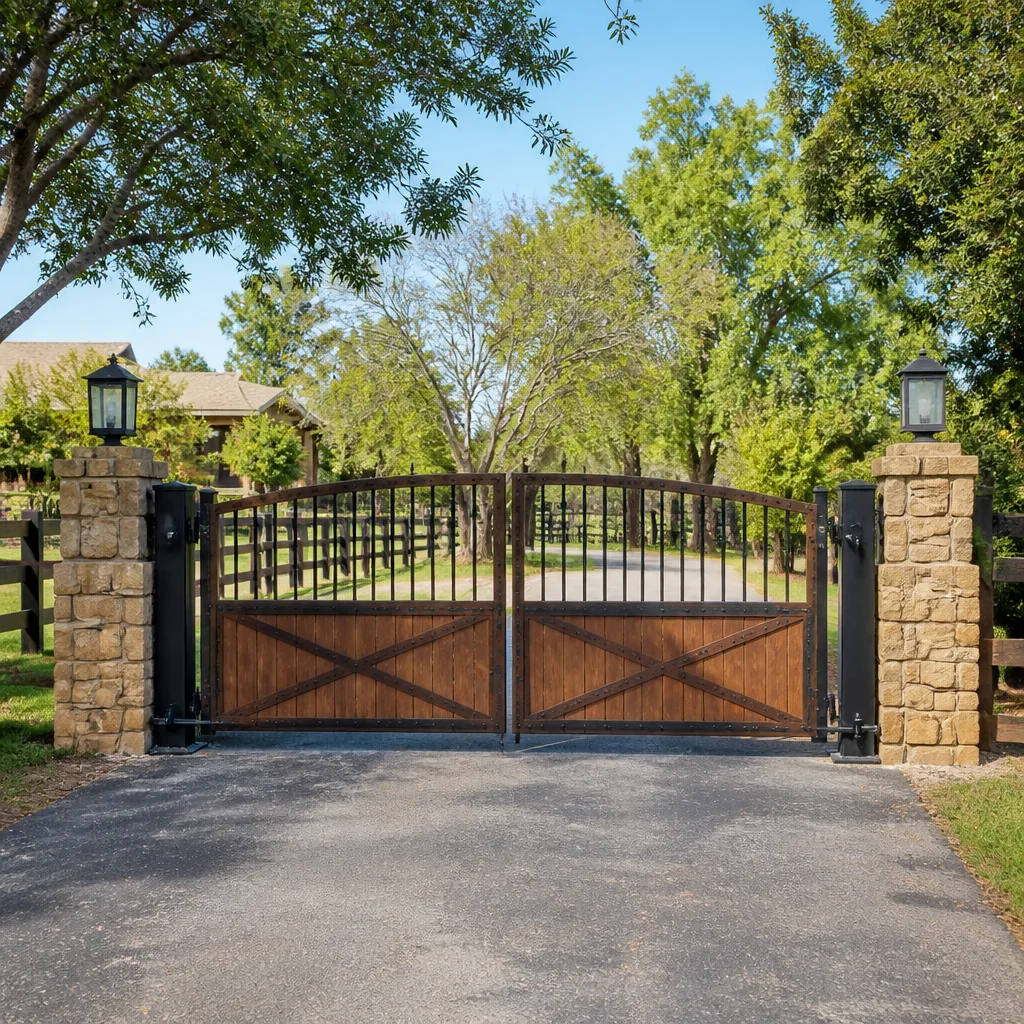
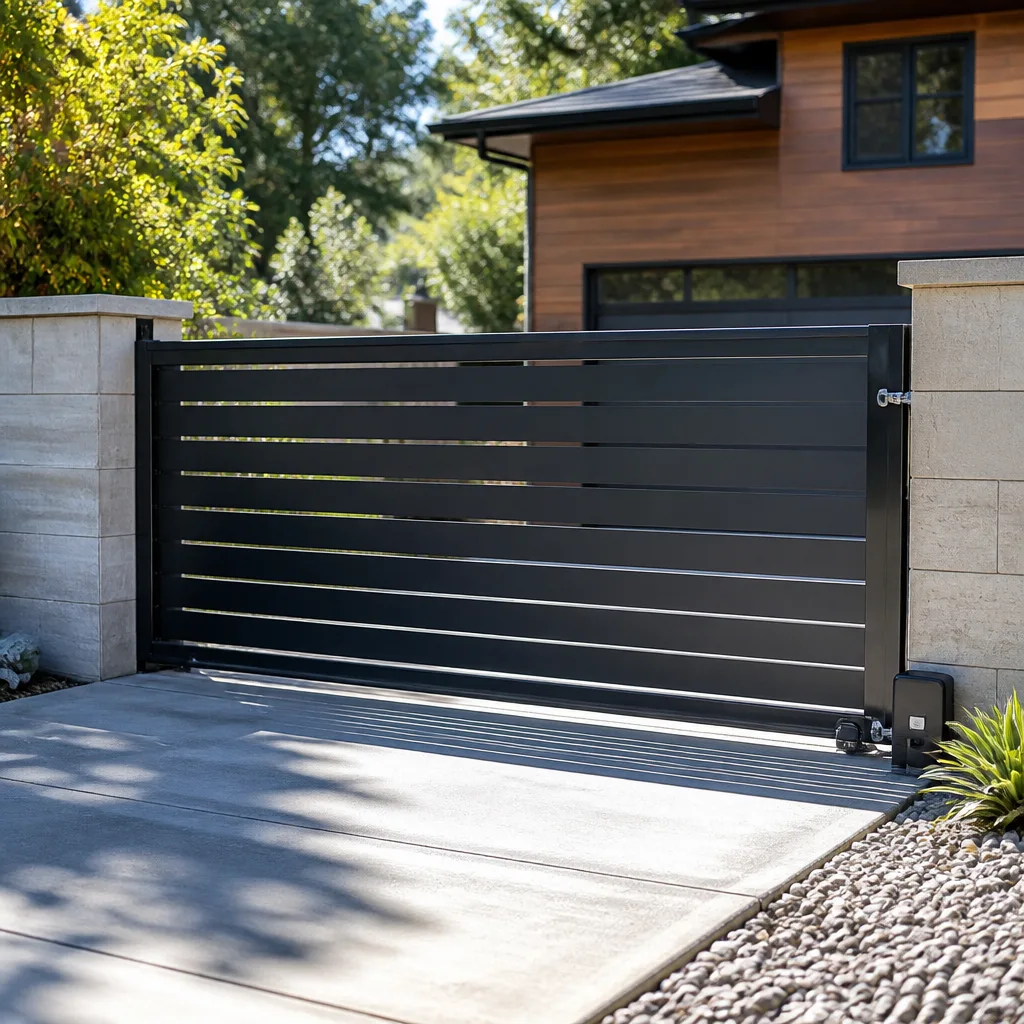
 Before
 After
After Before
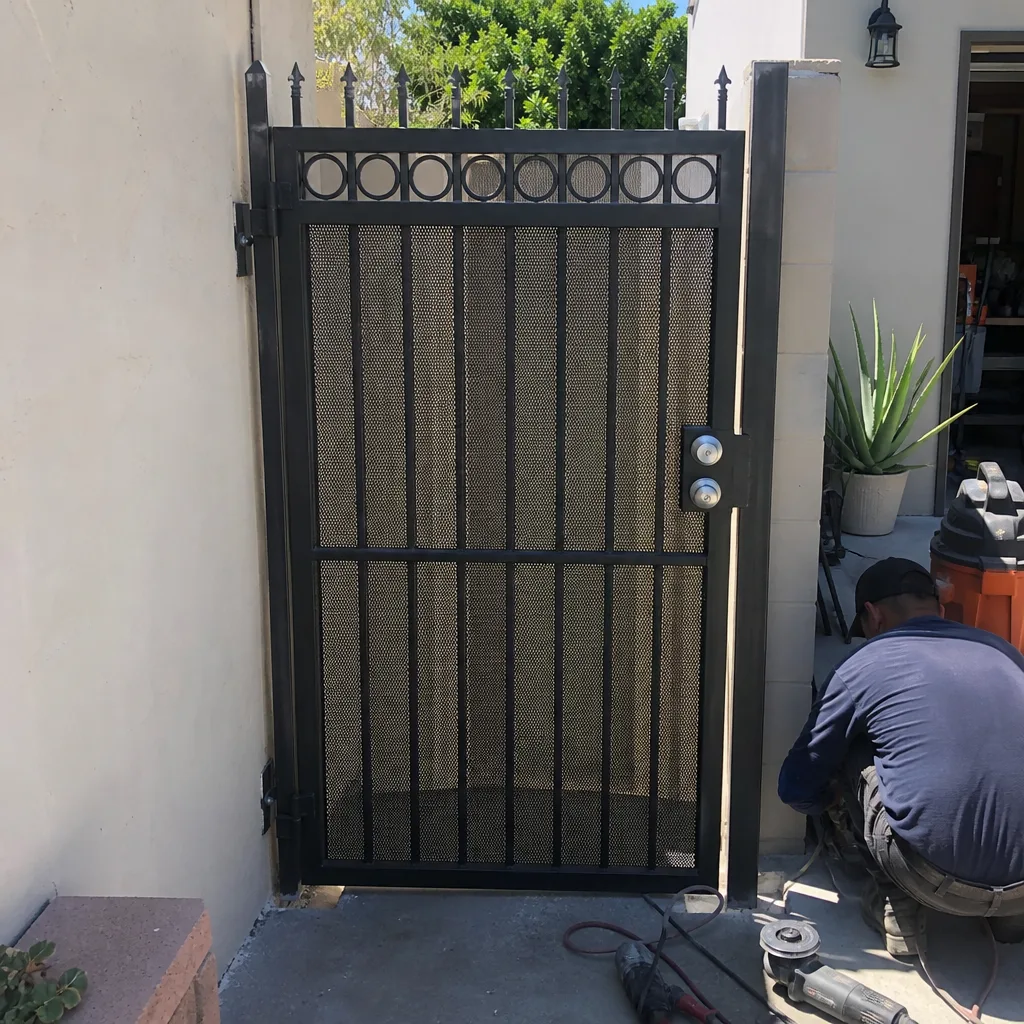 After
After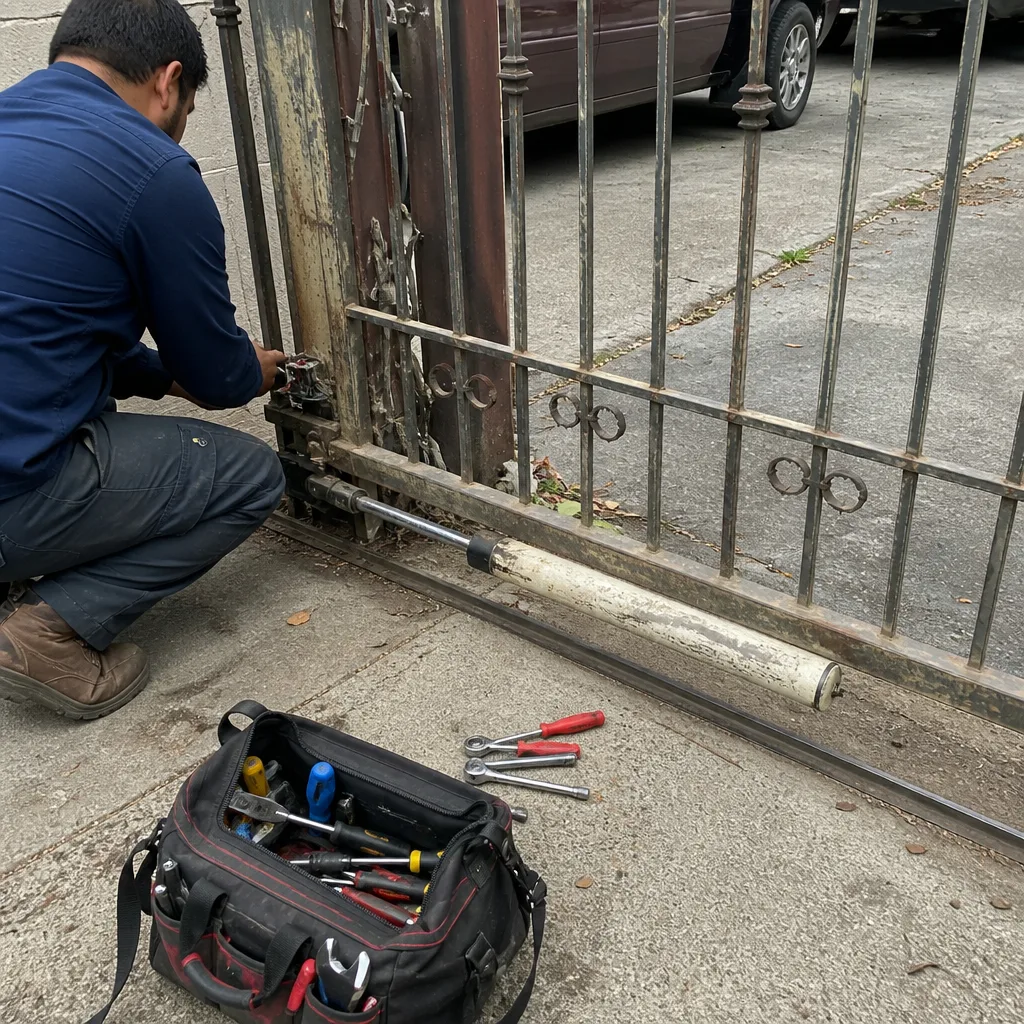 Before
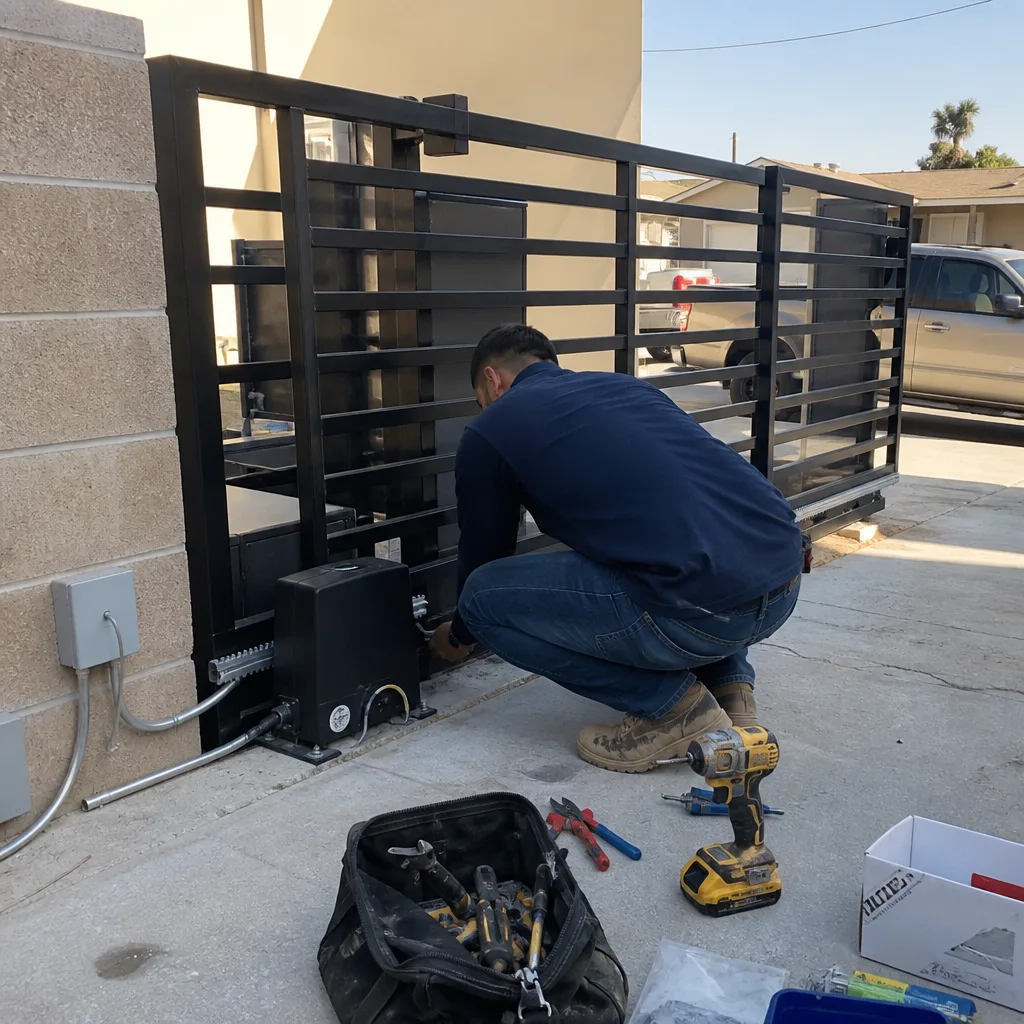 After
AfterHow to Hire a Gate Repair Contractor in Inglewood: A Step-by-Step Guide
A verbal estimate and a handshake is the industry standard for gate repair across Los Angeles County. It’s also why the same gate gets “repaired” three times in five years: nobody wrote down what was actually wrong, nobody documented what was actually done, and the next technician starts from zero. In Inglewood, where gates endure salt-tinged coastal air, relentless sun, and the occasional hard stop from a delivery truck, that cycle gets expensive fast. This guide gives you a documented, step-by-step method for hiring a gate contractor who can prove their work, not just promise it. You’ll learn which four documents to demand before anyone touches a tool, how to verify a license in two minutes, and how to compare two written quotes without getting fooled by a lower number.
Quick Answer
To hire a gate repair contractor in Inglewood, request four documents before any work begins: a written scope of work, an itemized price, a post-job wiring diagram, and photographic evidence of every adjustment and replacement. Verify the contractor’s California C-61/D28 specialty license through the CSLB database, ask diagnostic questions that force the technician to name the failed component, and reject any offer that waives a diagnostic fee only if you approve a repair. A contractor who can produce those four documents and answer those questions can prove what they found and what they fixed.
Table of Contents
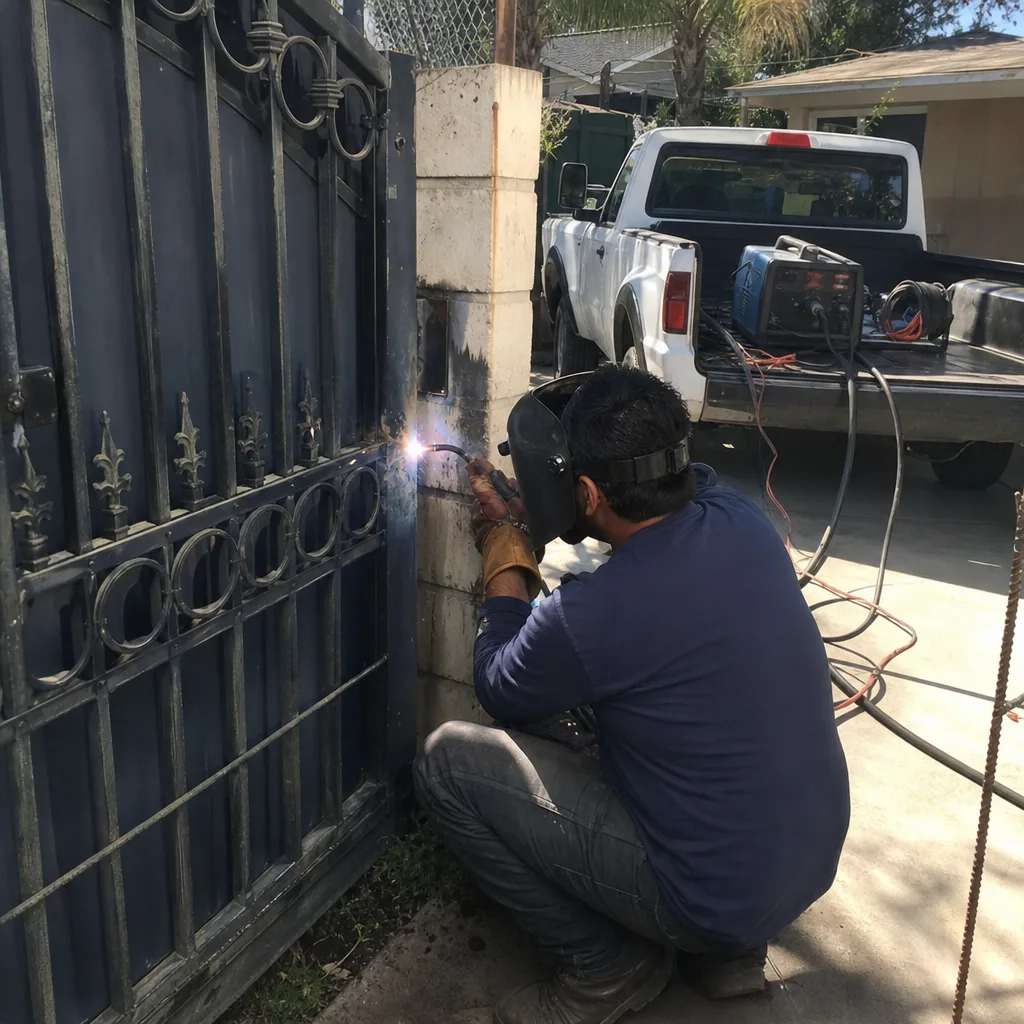
- The Four Documents Every Legitimate Gate Contractor Should Provide
- How to Verify a C-61/D28 License in Under Two Minutes
- Questions That Reveal Whether the Gate Was Actually Diagnosed
- Red Flags Specific to the Inglewood Gate Repair Market
- How to Compare Two Written Quotes Line by Line
- The Hiring Process: A Step-by-Step Walkthrough
- What to Expect After the Repair Is Done
- Common Mistakes to Avoid
- When to Call a Professional
- Frequently Asked Questions
- The Bottom Line
BeforeAfterThe Four Documents Every Legitimate Gate Contractor Should Provide
Most gate repair calls in Inglewood start the same way: the gate stops opening, the homeowner calls a number from a community board or a neighbor’s referral, and a technician shows up with a multimeter and a truck full of generic parts. Two hours later, the gate works. Six months later, it doesn’t. What’s missing from that scenario isn’t skill. It’s documentation. A gate is an electro-mechanical system, and without a written record of what was found and what was changed, every future repair is a fresh diagnosis that you pay for all over again.
We learned this in commercial access-control work before we ever touched a residential driveway gate. On a commercial site, you don’t leave without a work order, a wiring diagram, and a photo log. The client’s facility manager wouldn’t accept anything less. Residential homeowners deserve the same standard, and in most cases nobody offers it. Here are the four documents you should require from any gate contractor in Inglewood before you sign off on the work.
1. A Written Scope of Work
This is a plain-language description of what the contractor will do. Not “repair gate.” Something like: “Replace right leaf limit switch, adjust arm bracket on Viking operator, reweld top hinge bracket on drive gate post, rebalance leaf.” If a contractor can’t or won’t write down exactly what they intend to do, you have no way to hold them to anything. In Inglewood’s older neighborhoods like Morningside Park and Century Heights, gates are often retrofitted installations on posts that were never designed for automated operation. The scope should account for that reality, not gloss over it. Under Haven Standard Clause 1, the written scope and the written price are the same document and both are handed to you before any work begins. That’s the whole point: a gate repair should never be a mystery you’re asked to pay for after the fact.
2. An Itemized Price
An itemized price separates parts, labor, and any subcontracted work like welding or concrete. It tells you what you’re paying for and gives you a tool to compare against another quote. It also protects you from the “diagnostic fee waived with repair” bait, which we’ll get to in the red flags section. In Inglewood, where many homes have custom steel gates that require fabrication work, an itemized price is the difference between knowing a bracket was welded and merely hoping it was. If a contractor gives you a single number on a business card, ask them to break it down. If they refuse, that’s an answer. For reference, most gate repair in Inglewood jobs we see fall between $185 and $650 depending on the component and the brand of opener on the property.
3. A Post-Job Wiring Diagram
This one surprises people, because almost no residential gate company does it. But think about what a wiring diagram gives you. It shows which wire goes where, which limit switch controls which direction of travel, and what settings the control board is running. When the gate fails again next year, the diagram tells the next technician what the previous technician changed. That’s not a luxury, it’s a time-saver that protects you from paying for a rediscovery process. We photograph or sketch the control board and wiring on every visit and include that record in the job file we leave with the homeowner. It’s the same habit that comes from commercial gate automation work, where a missing diagram means an hour of tracing wires before any diagnosis can begin.
4. Photographic Evidence
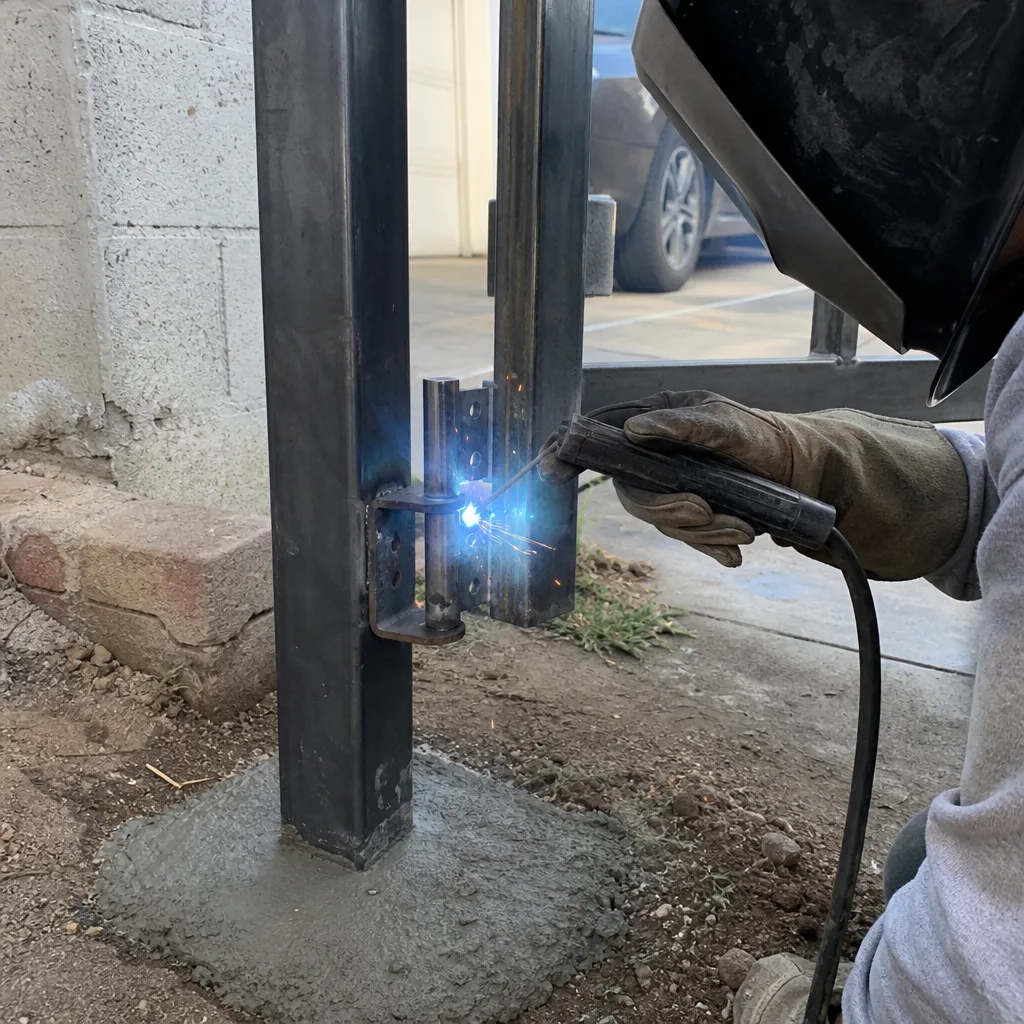
Photos of what was found, what was adjusted, and what was replaced. A photo-eye misaligned by two inches looks different from a photo-eye that’s been properly realigned. A limit switch set 12 degrees past travel is visible in a photograph. A broken weld on a hinge bracket is visible before and after the repair. Under Clause 4 of the Haven Standard, every visit includes a documented photo record at no additional charge. You get a photo log you can keep, and we file a copy in the job record. If a contractor tells you they replaced a capacitor but can’t show you the old part or a photo of the new one installed, treat that claim as unverified.
How to Verify a C-61/D28 License in Under Two Minutes
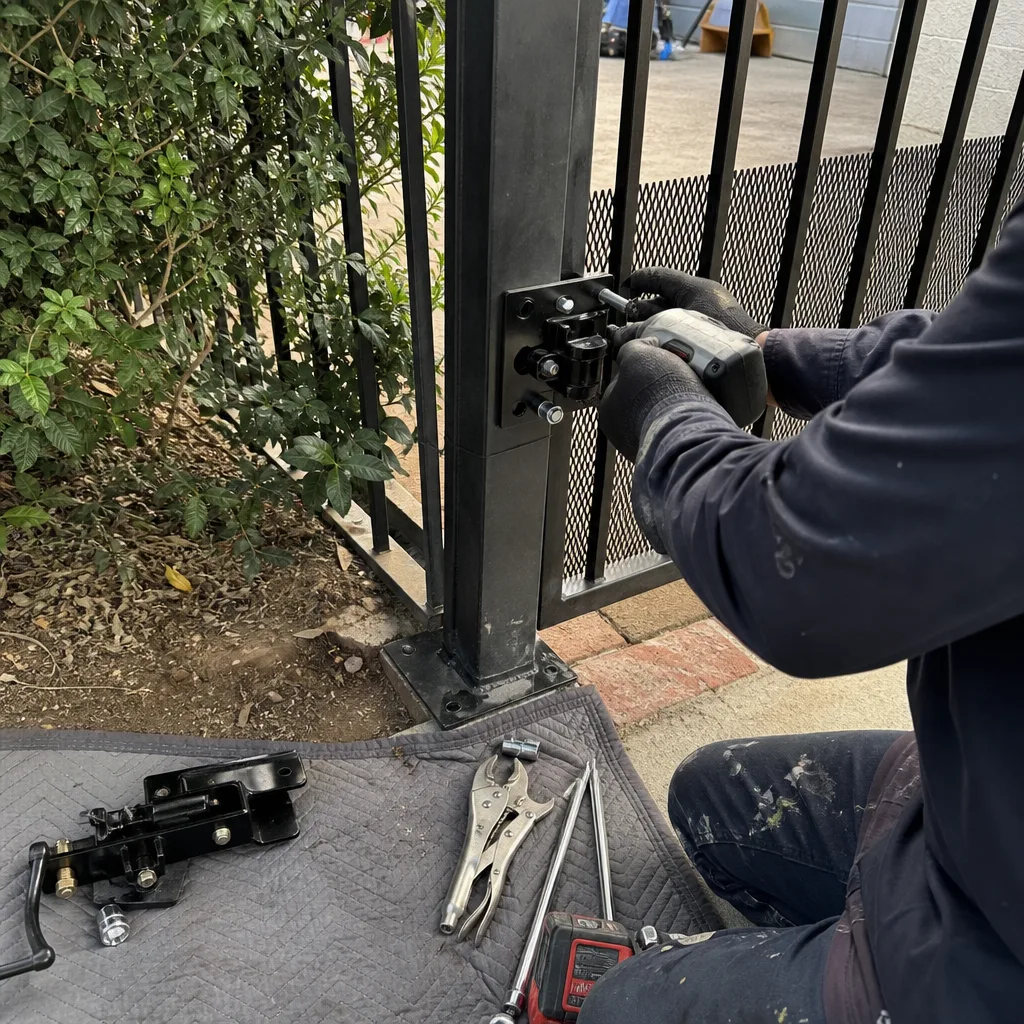
California requires a specific specialty license for gate and access control work: the C-61/D28 license, which covers “doors, gates, and activating devices.” A general contractor’s license (B) is not the same thing, and an electrical license (C-10) doesn’t cover gate hardware. In Inglewood, unlicensed operators advertise on community boards, Facebook groups, and even flyers left in mailboxes. Some of them do good work. Some of them don’t. The point isn’t to guess. The point is to verify.
Here’s the two-minute check:
- Go to cslb.ca.gov and click “Check a License.”
- Enter the contractor’s name or license number. Ask the contractor for their license number over the phone or in writing before the visit. A legitimate operator will give it to you without hesitation.
- Confirm the license classification is C-61/D28 or a related specialty that covers gates and access control. Don’t accept a B or C-10 license as a substitute.
- Check the license status is “Active” and not suspended or expired.
- Confirm the business name on the license matches the name on the estimate or invoice.
This takes less than two minutes and it eliminates the largest category of bad outcomes: unlicensed operators who undercut on price, take payment, and vanish when the repair fails. Inglewood’s housing stock is a mix of single-family homes with driveway gates, duplexes with shared gates, and light commercial properties. The gate systems on those properties vary widely, from Viking swing-arm operators on older steel gates to Ghost Controls solar kits on newer installations. A contractor who can’t show you a current C-61/D28 license shouldn’t be on the property, regardless of how many five-star reviews they have on a community board.
One thing to know: the CSLB database also shows workers’ compensation insurance status and any disciplinary actions or complaints. Spend an extra 30 seconds on that. If a contractor has an active license but a history of CSLB complaints alleging abandonment or failure to complete work, that’s a pattern worth weighing.
Questions That Reveal Whether the Gate Was Actually Diagnosed
Here’s the thing about gate repair: the symptoms are almost always generic. Gate won’t open. Gate opens halfway and stops. Gate reverses direction. Gate makes a grinding noise. Any technician can replace the most common part for a given symptom and leave. Whether that fixes the actual problem is a different question. A real diagnosis requires the technician to trace the fault down to a specific component. The questions below are designed to force that distinction. You can ask them over the phone before booking, or in person before the tech starts work.
“What component did you identify as the cause?”
This is the direct question. If the answer is specific “the limit switch on the right leaf is failing to trip at full travel, which is why the motor keeps running past the stop” then the diagnosis is real. If the answer is vague “looks like the opener’s going bad, probably needs a new one” then the technician hasn’t traced anything. A diagnosis that ends in “needs a new opener” without a specific failed component named is a proposal, not a diagnosis.
“Can you show me the part you’re replacing and explain what it does?”
This question works because a technician who can explain a component in plain language will. A technician who can’t or won’t probably didn’t actually find anything wrong with it. A photo-eye is the infrared beam that stops the gate if something crosses the path. A limit switch is the device that tells the motor where the gate’s travel stops. An arm bracket is the mechanical linkage that connects the operator to the gate leaf. For DoorKing and Elite operators, the control board is a replaceable module that costs less than a full opener replacement and often resolves the same symptoms a “new motor” quote is trying to sell you. A contractor who explains what the part does and why it failed is a contractor who diagnosed the gate.
“What happens if the gate still doesn’t work after this repair?”
You’re looking for a contractor who says, without hedging, that they’ll return and fix it at no charge. That’s the 365-Day Done Right Promise in plain terms: if the repair isn’t right, it gets made right, no argument and no fee, for a full year. If a contractor deflects, or says that depends on what else is wrong, or starts talking about “additional findings,” that’s a signal that you’re dealing with a parts-swapper rather than a diagnostician. A parts-swapper’s business model is built on coming back. A diagnostician’s business model is built on fixing it the first time.
Red Flags Specific to the Inglewood Gate Repair Market
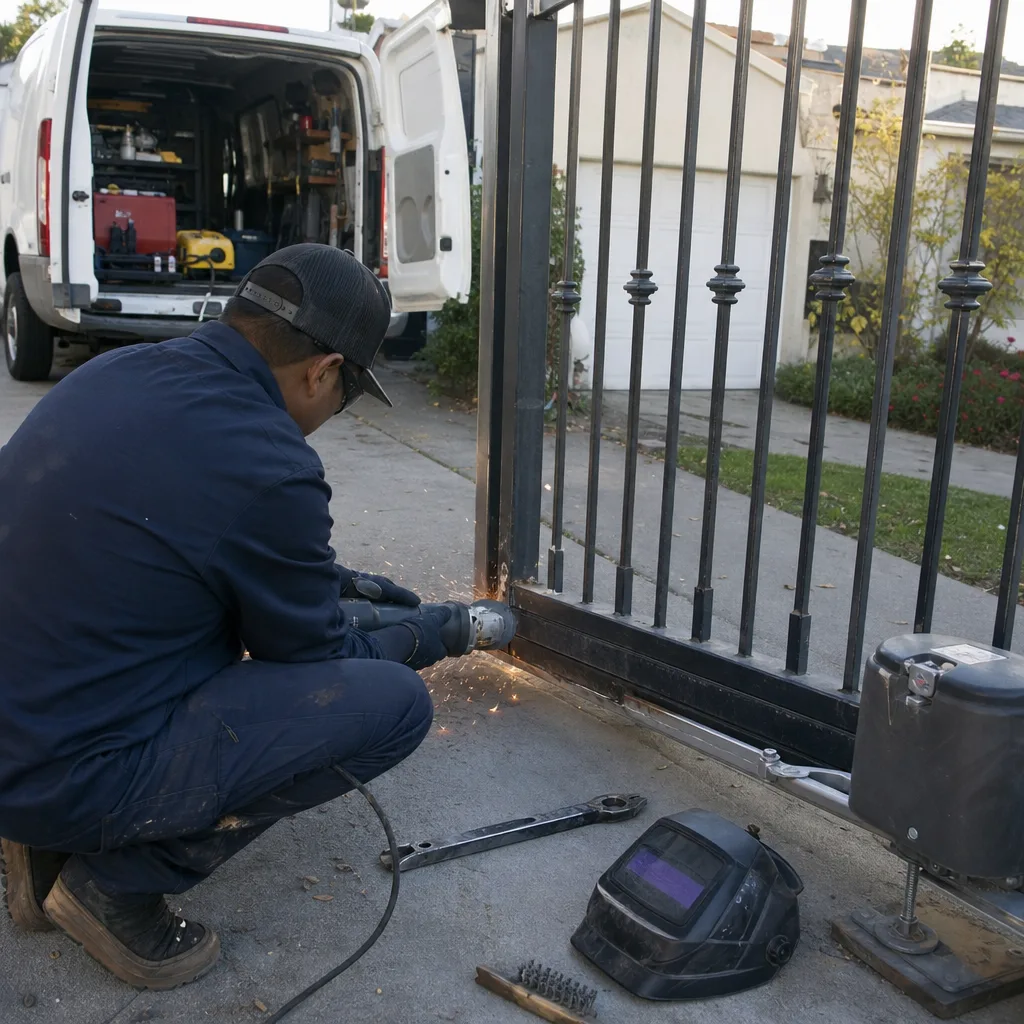
Every market has its own failure patterns. Inglewood’s gate repair landscape is shaped by three things: a high proportion of older gates retrofitted onto posts and columns that weren’t designed for automation, a steady supply of unlicensed operators who advertise where homeowners look, and the “diagnostic fee waived with repair” offer that economically incentivizes finding something to replace. Here are the red flags that show up most often in this market, and what they actually mean.
The “Diagnostic Fee Waived With Repair” Offer
This sounds like a deal. It isn’t. A diagnostic fee exists to compensate the technician for the time and skill required to trace a fault to its source, independent of any replacement work. When that fee is waived if you approve a repair, the technician’s income now depends on finding something to replace. That creates a perverse incentive: the more unnecessary work, the more money. In practice, we’ve seen unlicensed Inglewood operators quote $900 “opener replacements” on gates where a $45 limit switch was the actual fault. A legitimate contractor charges a separate diagnostic fee and then applies that fee to the repair if you approve the work. That structure aligns the incentive with getting the diagnosis right. Under Haven Standard, the diagnostic work is quoted up front and itemized separately from the repair. You know what you’re paying for the finding, and you know what you’re paying for the fix.
Unlicensed Operators on Community Boards
Nextdoor, Facebook Marketplace, and the bulletin boards at the Inglewood Public Library and local churches all carry the same advertisements: “Gate repair, cheap, call me.” Some of these operators are skilled handymen who grew up fixing gates for family and neighbors. Some aren’t. The distinction matters because gate automation involves line voltage, control boards, and safety sensors. A miswired operator can create a shock hazard or a gate that fails to reverse when something crosses its path. That’s a safety issue for your family and for any delivery driver who approaches the gate. California’s CSLB requires the C-61/D28 license specifically because gate and access control work involves both mechanical and electrical systems. Asking for the license number is not an insult. It’s the minimum.
The “Same Symptom, Same Part” Technician
Some technicians arrive, hear “gate won’t open,” and replace the capacitor or the battery or the control board because those are the parts most commonly associated with that symptom. They never trace the fault. They never measure voltage at the motor. They never check the photo-eye alignment. They swap the most likely part and if the gate works after, they leave. The gate often does work, briefly, because the replaced part wasn’t the only problem, or because the act of swapping parts jostled something back into alignment. Then the same symptom comes back, and you call someone else, and the cycle repeats. In Inglewood’s older neighborhoods, where gates are 10 to 20 years old and have been serviced by multiple hands over the years, this pattern is common. The fix is to hire a contractor who documents the diagnosis, not just the replacement. A photo of the failed component with the measurement that indicated it was failed is the difference between a quote and a claim.
The “Cash Price” Offer
A cash price isn’t necessarily a red flag on its own. But combined with a lack of license or a refusal to provide a written scope, it’s a signal that you’re dealing with an underground operator who can’t or won’t provide documentation. In Inglewood, where many homeowners are rightfully price-conscious, the cash offer is a real temptation. The problem is that a cash transaction with an unlicensed operator leaves you with no CSLB recourse if the work fails. There’s no bond to claim against, no license to suspend, no leverage at all. You’ve paid in cash, and the gate still doesn’t work, and the person who took your money has changed their phone number. A written quote and a check or card payment create a paper trail. That’s not bureaucracy. That’s protection.
How to Compare Two Written Quotes Line by Line
You called two contractors and got two written quotes. One is $850. The other is $550. The cheaper one is a better deal, right? Not necessarily. A $300 difference between two quotes for the same gate usually means one of four things: different parts quality, different scope, different labor rates, or different levels of thoroughness. Here’s how to read the differences line by line.
Step 1: Compare the Scope, Not Just the Price
Read the scope of work on each quote. Does the $850 quote include rewiring the photo-eye, rebalancing both leaves, and a full test of the safety reverse function? Does the $550 quote only include replacing the arm bracket? If the scopes are different, the prices aren’t comparable. This is the single most common source of “cheaper quote” frustration: the cheaper quote simply omitted work the other contractor considered necessary. Ask the cheaper contractor why their scope doesn’t include the line items the other contractor listed. If they say “you don’t need that,” ask them to explain why. A good contractor will give you a reason. A bad contractor will give you a shrug.
Step 2: Compare the Parts by Name
Look at the part numbers or brand names on each quote. A generic “opener” is not the same as a named part. A LiftMaster control board, a FAAC hydraulic arm, a BFT gear motor, a DoorKing slide operator, a Ghost Controls solar kit, a Viking swing arm, a Linear receiver, an Elite photoelectric sensor, or a Mighty Mule gate opener each has a different price point and a different reliability profile. If one contractor quotes a name-brand part at a specific price and another quotes an unlabeled “replacement motor” at a lower price, you’re not comparing the same repair. The unlabeled motor might be a cheap import that fails in 18 months. Ask both contractors to name the brand and part number in writing. A contractor who refuses or says “whatever fits” is not doing you a favor on price. They’re shifting risk onto you.
Step 3: Compare the Labor Hours and Rate
Labor rates for licensed gate contractors in the Inglewood area generally run between $90 and $150 per hour. If one quote shows two hours of labor at $110 an hour and the other shows one hour at $175 an hour, you’re looking at different assumptions about how long the job takes. The first contractor might be right, and the second contractor might be underestimating. Or the second contractor is right, and the first is padding. The way to find out is to ask each contractor to walk you through their labor estimate. “You quoted three hours for the arm bracket replacement. Can you explain what takes three hours?” A contractor who can explain the steps is a contractor who has done this specific job before, on this specific gate automation brand, and isn’t guessing.
Step 4: Look for What’s Missing
Does one quote include a line item for post-job documentation: photos, wiring diagram, written record of part numbers installed? Does it include a written statement of warranty terms? Does it include a rebalance of the gate leaf after the hardware work is done? These line items are exactly what the cheaper quote often leaves out. The $300 difference isn’t savings. It’s the cost of the documentation and the rebalancing and the warranty work the other contractor is already planning to do. Under Clause 1 and Clause 4 of the Haven Standard, the written price and the photo documentation are part of every job, not optional add-ons. If one quote includes them and the other doesn’t, the cheaper quote is cheaper because it’s doing less.
The Hiring Process: A Step-by-Step Walkthrough
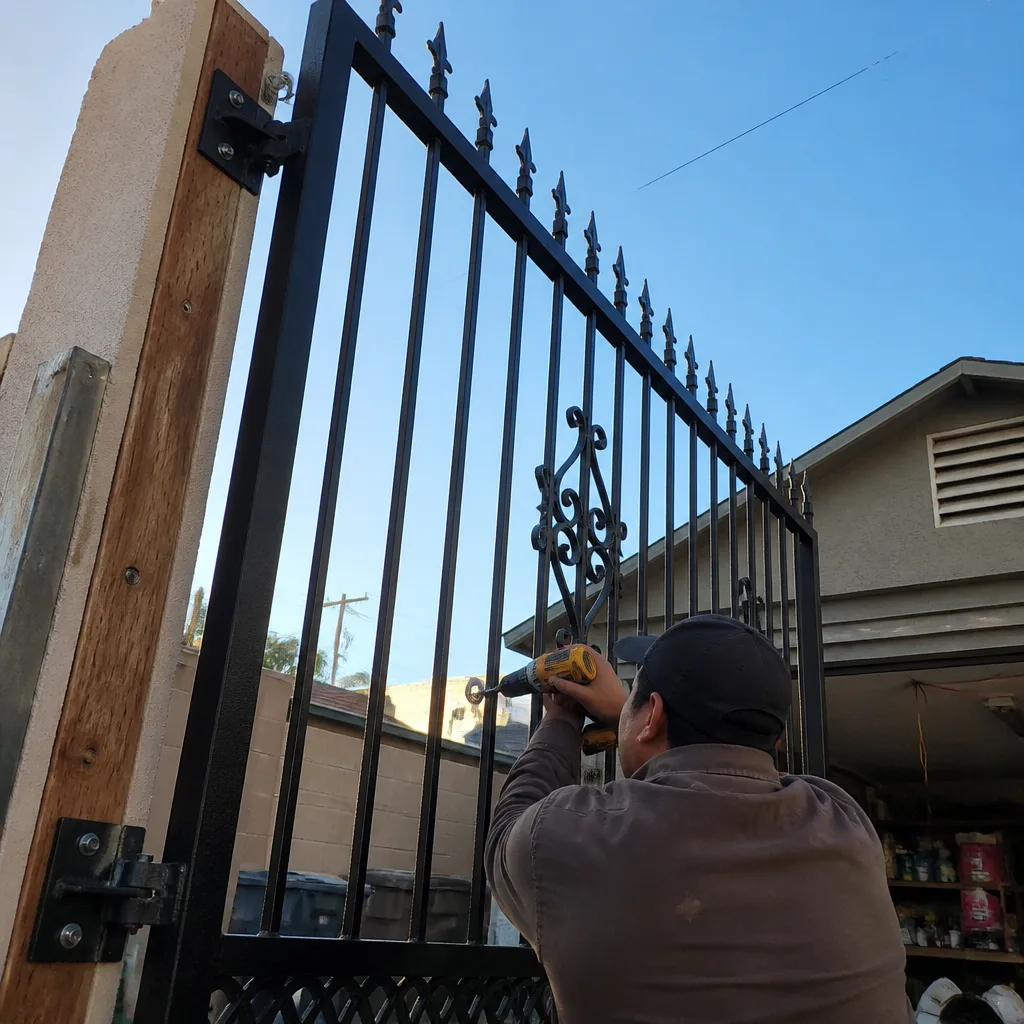
Here’s the full process, end to end, for hiring a gate repair contractor in Inglewood-our complete guide to gate repair in Inglewood in actionable form. Print this, screenshot it, or just read it through before you make the first call. Each step takes a few minutes, and together they take you from “gate doesn’t work” to a documented repair with a written record.
- Document the symptom. Before you call anyone, write down exactly what the gate does and doesn’t do. Does it open but not close? Close but not open? Open halfway and reverse? Make a grinding noise? That symptom log is the first piece of information the technician needs. A good contractor will ask you for it. A bad contractor will skip straight to a quote.
- Check the license. Ask for the contractor’s C-61/D28 license number and verify it at cslb.ca.gov. This takes two minutes and eliminates the largest category of bad outcomes. If the contractor won’t give you a license number over the phone, that’s a full stop.
- Request a diagnostic visit with a separate diagnostic fee. The diagnostic fee is the honest market structure: you pay for the finding, not for the replacement. A contractor who refuses to separate the diagnostic from the repair is a contractor whose income depends on finding something to replace. In Inglewood, diagnostic fees for gate systems typically run $75 to $150, and a legitimate contractor will apply that fee toward the repair if you approve the work.
- Get the written scope and itemized price before any work starts. No exceptions. The scope names what will be done. The price names what it costs. Both are written down and handed to you. If the technician says “I’ll write it up after,” you’re about to approve work you haven’t seen priced. Don’t.
- Ask the diagnostic questions from the section above. “What component did you identify as the cause?” “Can you show me the part and explain what it does?” “What happens if the gate still doesn’t work?” If the answers are vague or evasive, stop and call someone else.
- Approve the work in writing. The written quote is your contract. Initial it, sign it, or reply to the email. That’s your record of what was agreed.
- Request the four documents at completion. Written scope, itemized price, post-job wiring diagram, photographic evidence. We call this the Haven Standard and we’ve never had a homeowner regret asking for it. You should expect it from any gate installation in Inglewood or repair contractor as the minimum standard.
- Test the gate in front of the technician. Open it, close it, reverse it, stop it halfway. Watch for the symptom you originally documented. If the gate works and the symptom is gone, sign off. If it doesn’t, don’t. The warranty clock starts when the repair is verified, not when the tech pulls out of the driveway.
What to Expect After the Repair Is Done
A legitimate gate repair doesn’t end when the truck leaves the driveway. It ends when you have a written record of what was found, what was changed, and what to do if the problem returns. Here’s what a properly documented job looks like from the homeowner’s side.
You should leave the job with a written summary of the diagnostic findings: symptom noted, cause identified, component measured or tested, repair performed, parts installed with brand and part number. You should have photos of the failed part or the failed adjustment, and photos of the corrected installation. You should have a wiring diagram or a clear photo of the control board with the adjusted settings labeled. On a gate motor or opener in Inglewood, that diagram is especially valuable because every brand wires differently: a BFT board does not wire like a Linear board does not wire like a Ghost Controls board.
You should also have the warranty terms in writing, with a specific duration and a specific obligation. Our warranty is the 365-Day Done Right Promise: if the repair is not right, we make it right, no argument and no fee, for one full year from the repair date. That’s a flat commitment, not a conditional one. If anything we fixed fails within that window, we return and repair it at no additional charge. The only thing we ask is that you call the number on the job record and tell us what the gate is doing.
Finally, file the paperwork. Put the quote, the invoice, the photo log, and the wiring diagram in a folder with the gate’s other records. When the gate eventually needs service again, that folder is worth more than the gate itself, because it tells the next technician exactly what was done and when. That’s what breaks the three-repairs-in-five-years cycle. Not a better motor. A better record.
Common Mistakes to Avoid
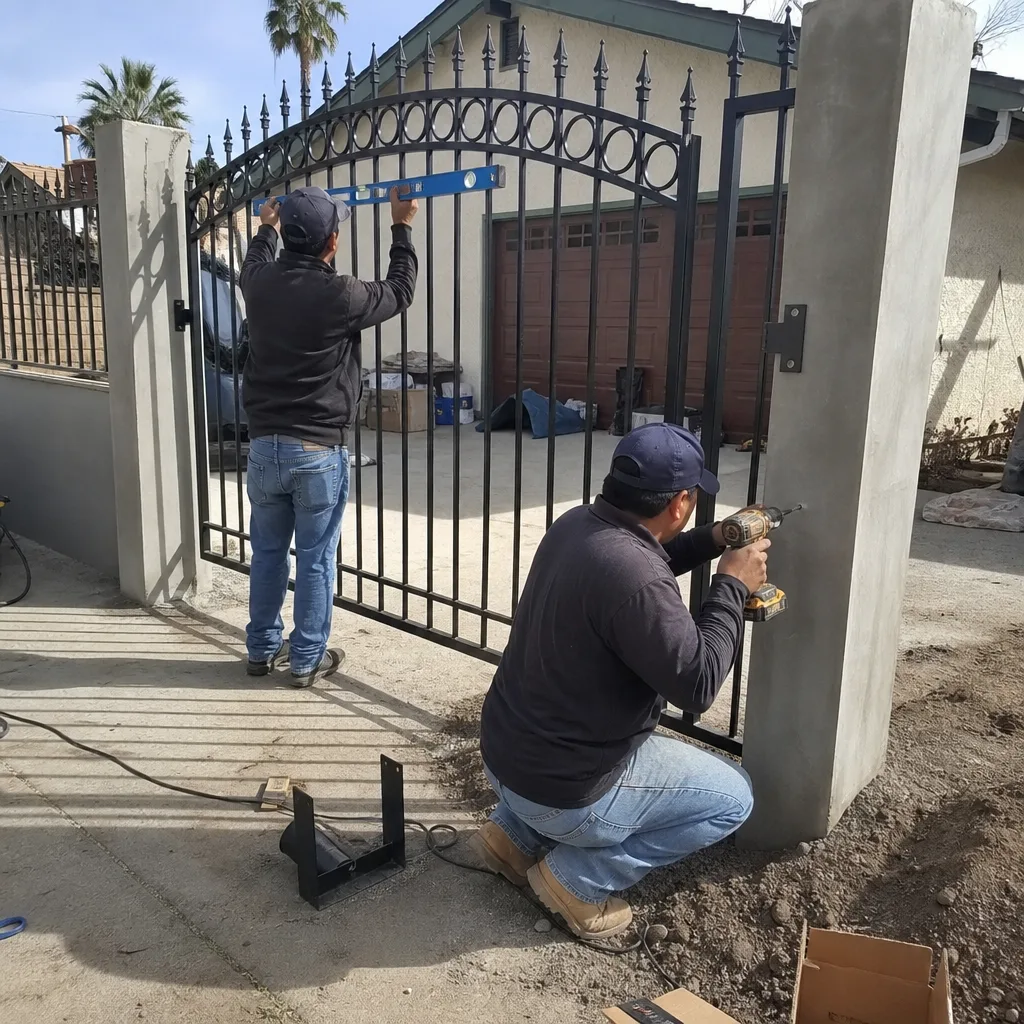
- Hiring on price alone. The cheapest quote in Inglewood is often cheap because it omits the documentation, the rebalancing, or the proper parts. You save $300 on the repair and pay $900 to redo it in eight months.
- Accepting a verbal estimate. A verbal estimate isn’t a price. It’s a suggestion with no recourse. If it’s not in writing, it didn’t happen.
- Skipping the license check. Two minutes on the CSLB website eliminates the largest category of gate repair horror stories in Inglewood: unlicensed operators who vanish when the repair fails.
- Falling for the “diagnostic fee waived with repair” offer. That structure pays the technician to find something to replace, not to find what’s actually wrong. The honest structure is a separate diagnostic fee applied toward the repair if you approve it.
- Not testing the gate before the technician leaves. The warranty clock starts when the job is signed off. If the symptom isn’t gone, don’t sign off until the technician explains why.
- Discarding the documentation. The wiring diagram, photo log, and written record are the difference between a $100 adjustment and a $700 rediscovery on the next service call. Keep them.
- Assuming a new gate is the solution. Many Inglewood gates are worth repairing. A new gate costs $3,000 to $12,000 installed, and in most cases the existing gate can be brought back to reliable operation for a fraction of that. A contractor who steers you toward replacement without explaining what’s wrong with the existing gate is selling a product, not a diagnosis.
When to Call a Professional
You should call a gate contractor rather than attempting repair yourself any time the problem involves line voltage, high-tension springs, a control board, or a safety sensor. A gate opener is wired into your home’s electrical system at 120 volts, and the gate leaf itself can weigh 400 to 800 pounds. A spring under tension or a gate that reverses unexpectedly are serious hazards. If you’re dealing with a misaligned photo-eye, a limit switch that’s out of adjustment, or a control board fault, that’s work a trained technician can do safely and document properly. The DIY approach on gate automation too often ends in a damaged control board, a gate off its track, or worse. Vance Gate Repair Inglewood offers free estimates in Inglewood, call (424) 380-7998.
Frequently Asked Questions
Gate repair in Inglewood typically runs between $185 and $650 for most residential repairs, depending on the component and the brand of opener. Simple adjustments like photo-eye realignment or limit switch resets are at the lower end. Control board replacements, arm bracket replacements, and welding work are at the higher end. Full operator replacements run higher, but a legitimate contractor will only recommend that when the existing motor has actually failed, not as a first option. Call (424) 380-7998 for an exact quote, estimates are free.
Yes, in a real emergency, like a gate stuck open or a gate that won’t secure, we can typically dispatch a technician the same day. A live person answers the phone 24/7 at Vance Gate Repair Inglewood, and we’ll talk through the symptom over the phone before we send a technician out. For non-emergency repairs, the next available slot is usually within a day or two.
A full gate installation includes the gate fabric or leaf construction, hinges and mounting hardware, the operator and arm, safety sensors like photo-eyes, the control board and remote receivers, and the power run from the house to the operator. It also includes the post-set and any concrete or welding work the site requires. For Vance Gate Repair Inglewood home reference, every installation is quoted in writing with an itemized price before any work starts, and every installation includes a documented photo record when the job is complete.
Yes. The power run, the safety edges, the photo-eyes, and the loop detectors are all part of the gate system, and we service and install all of them. Gate automation is not just the motor; the safety components are what make a motor safe to operate around people, vehicles, and pets. A properly installed gate has at least one redundant safety system beyond the motor’s built-in reverse function.
We service nine major brands: LiftMaster, FAAC, BFT, Linear, Viking, Ghost Controls, DoorKing, Elite, and Mighty Mule. The right brand depends on the gate weight, the gate type, the power available at the site, and what’s already installed. We don’t steer customers toward a replacement brand when the existing operator can be repaired, and we don’t push a specific brand because of a sales agreement. The brand should match the gate and the duty cycle, not the contractor’s inventory. Some of the operators we work on most often in Inglewood are Viking swing arms on older steel gates and DoorKing and Elite slide operators on longer driveway runs.
If the gate frame, the hinges, and the mounting posts are structurally sound, the gate is usually worth repairing. Gates on properly set posts can last 20 to 30 years. If the frame is rusted through, the posts have shifted or cracked, or the gate has been hit hard enough to deform the leaf, replacement may be the right call. A legitimate contractor will show you the structural damage before recommending replacement, not just tell you it’s time. Bring the written estimate to us for a free second opinion on any gate replacement recommendation.
The Bottom Line
Hiring a gate repair contractor in Inglewood isn’t about finding someone with the most reviews or the lowest price. It’s about finding someone who can show you what they found and prove what they fixed. The four documents, the license check, the diagnostic questions, and the line-by-line quote comparison are your tools. Use them and you’ll pay for one repair, not three. Skip them and you’re rolling the same dice every other Inglewood homeowner rolls, hoping the tech who shows up is honest and thorough. Hope is not a strategy. Documentation is.
Written by Adrian Vance, Owner at Vance Gate Repair Inglewood, serving Inglewood since 2014.